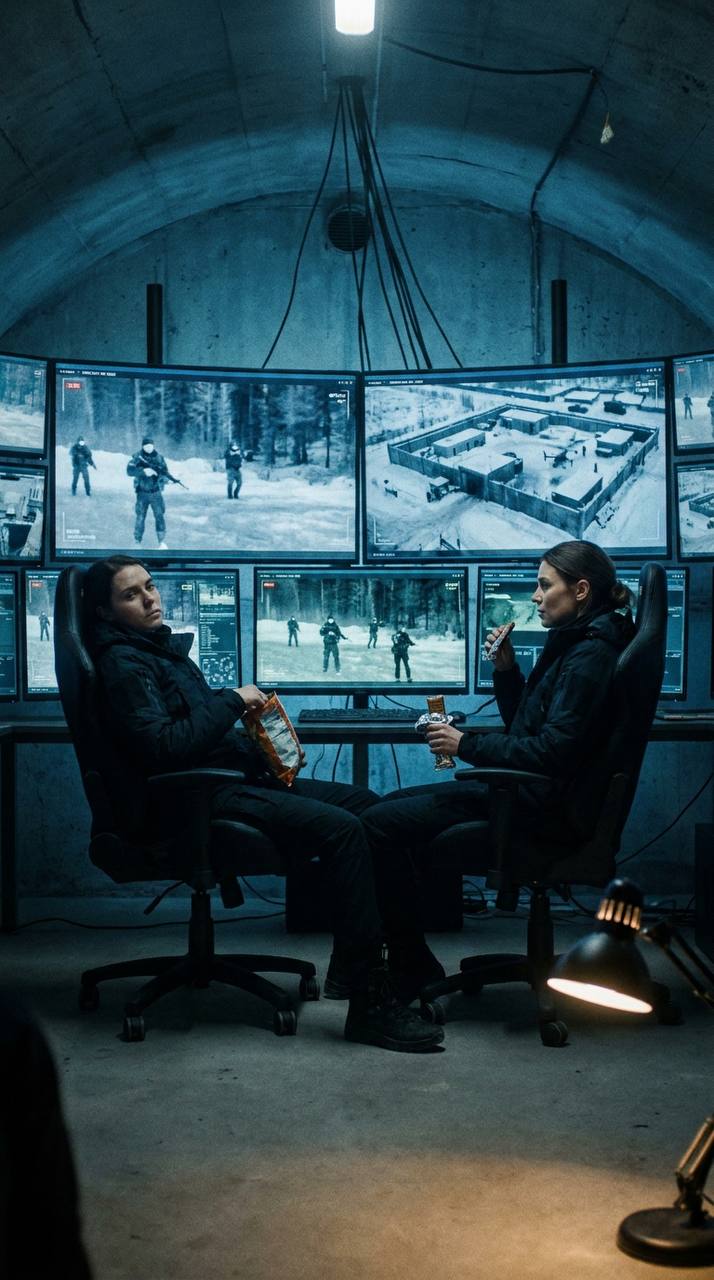
On the morning of January 12, 2024, a 47-second video was uploaded to a YouTube channel called “Bitterroot Lens.” The channel had no other content, no subscribers, and no description. The video showed a group of six men dressed in white and grey winter camouflage, carrying rifles, walking in single file across a snow-covered clearing. Their boots left deep, deliberate impressions in the powder. The camera, held by someone walking backward, captured a low-hanging sky and the dark shapes of pine trees. At the 45-second mark, one of the men in the line turned his head sharply toward the camera. The video cut to black. Within 48 hours, the clip had been viewed over 1.2 million times, shared across Reddit, Twitter, and TikTok. Commenters debated whether it was a film set, a military exercise, or something else. But the person who filmed it, a 31-year-old freelance photographer named Elias Vance, never surfaced to explain. He had not been seen since January 10.
The Video and Its Aftermath
Elias Vance lived in a one-bedroom apartment on the outskirts of Missoula, Montana. He worked as a contract photographer for outdoor gear catalogs and occasionally shot landscapes for regional magazines. He had no criminal record, no known political affiliations, and no history of posting anything controversial online. The video’s metadata, analyzed by independent forensic examiners, showed it was recorded at 3:47 PM on January 10, 2024, on a Sony A7 III camera. The GPS coordinates placed it at the base of the Bitterroot Range, near the entrance of the abandoned Millbrook Mine, a site that had been closed since 1998 after a collapse killed three miners.
Local authorities initially dismissed the video as a hoax or a staged scene for a short film. But when Vance’s sister, Rebecca Vance, filed a missing person report on January 14, the Missoula County Sheriff’s Office began a formal investigation. The video itself was examined frame by frame. Analysts identified the rifles as Sig Sauer MCX carbines, a weapon common among private security contractors but rarely seen in civilian hands in that part of Montana. The patches on the men’s shoulders appeared to show a stylized mountain peak with the letters “CSG” underneath—no known unit insignia in the U.S. military.
The Disappearance of Elias Vance
According to interviews with friends and neighbors, Vance left his apartment on the morning of January 10. He told a neighbor he was going to photograph elk near the Lost Trail Pass, about 60 miles south of Missoula. He was driving a 2018 Subaru Outback, blue, with a roof rack and a dented rear bumper. His cell phone pinged off a tower near the Millbrook Mine access road at 2:15 PM that day. It was the last signal from his device.
On January 14, a Forest Service ranger found Vance’s Subaru parked at the end of a logging road, about a mile from the mine entrance. The keys were in the ignition. The camera bag was on the passenger seat, but the Sony camera was missing. Inside the bag, investigators found a notebook with a single handwritten phrase: “They don’t want anyone to know about the cabin.” No other notes, no receipts, no personal items. The car doors were unlocked. There was no sign of a struggle, no blood, no footprints leading away—only the tire tracks from Vance’s car and the ranger’s truck.
A search of the area with dogs and a drone found nothing. The mine entrance was sealed with a chain-link fence and a padlock, both intact. The snow around the car was undisturbed except for a single set of boot prints that led from the driver’s side door into the trees. The prints stopped after 30 feet, as if the person who made them had been lifted or had stepped onto a cleared path. No matching prints were found anywhere else in the vicinity.
Investigating the Mercenaries
The video’s viral spread attracted the attention of independent researchers and former military personnel. One of them, a retired Army Ranger named David Chen, analyzed the footage and identified the CSG patch as belonging to Cascade Security Group, a private military contractor registered in Delaware but operating primarily in eastern Africa and the Middle East. Chen noted that the company had a small, unlisted office in Spokane, Washington, about 200 miles west of Missoula. When contacted by phone, a representative of Cascade Security Group denied any knowledge of the video or of any personnel operating in Montana. The company’s website listed only a P.O. box and a generic email address.
Local journalists dug into Cascade Security’s background. The company had been founded in 2017 by a former U.S. Marine named Garrett Hollis. Hollis had served in Iraq and Afghanistan and had been involved in several high-profile security contracts for mining companies in Central Africa. A 2021 report by the nonprofit group Global Witness had accused Cascade Security of providing armed escorts for a copper mining operation that was linked to deforestation and human rights abuses in the Democratic Republic of Congo. The company denied the allegations. Hollis did not respond to interview requests.
The Hidden Connection
While reviewing Cascade Security’s history, a research blogger named Amelia Torres made a connection that law enforcement had not yet pursued. In November 2022, a 29-year-old environmental activist named Julia Reyes disappeared near the same area of the Bitterroot Range. Reyes had been documenting illegal gold mining operations in the region, specifically those that used mercury and cyanide. She had published a series of articles for a small online magazine called The Basin Report. Her last known location was the Millbrook Mine area. Her car was found abandoned at the same logging road where Vance’s Subaru was later discovered. Her phone, laptop, and camera were never recovered. The case went cold after six months.
Torres noticed that in one of Reyes’s articles, she had mentioned a “remote cabin” in the forest near the mine, which she described as being used by a group of men who “acted like soldiers.” She wrote that she had been warned away by a man who refused to identify himself. The article was published three weeks before her disappearance. When Torres cross-referenced the article with Vance’s notebook—“They don’t want anyone to know about the cabin”—the parallel was clear. Both had stumbled onto something near that mine. Both had vanished.
The Missoula County Sheriff’s Office acknowledged the connection in a press conference on February 8, but stated that there was no evidence linking Cascade Security Group to either disappearance. The FBI was contacted and opened a preliminary inquiry, but no formal investigation was announced. The cabin mentioned by Reyes has never been located. Satellite imagery of the area, obtained by Torres through a public records request, shows a small clearing about a half-mile northeast of the mine entrance, but no structure is visible. Trees may have been planted or the cabin may have been removed.
The Ongoing Investigation
As of this writing, no arrests have been made. Elias Vance remains a missing person. His sister Rebecca has started a GoFundMe to hire a private investigator, but the money raised so far is not enough to conduct a search of the Bitterroot Range in winter conditions. The YouTube channel “Bitterroot Lens” has been taken down by the platform for violating terms of service—specifically, for posting content that incites violence. The original video is still circulating on other sites, often re-uploaded with conspiracy theories attached. Some claim it shows a secret government operation. Others say it is footage from a planned film that never materialized.
The most concrete lead remains Cascade Security Group. In March 2024, a former employee of the company, speaking on condition of anonymity, told a reporter that Garrett Hollis had purchased a tract of land near the Montana-Idaho border in 2019. The property includes several acres of forest and a structure that the employee described as a “training cabin.” The property is not listed in Cascade Security’s public records. The reporter attempted to visit the site but was turned away by a security guard who refused to identify himself. No search warrant has been issued.
The snow in the Bitterroot Range has melted now, revealing the muddy ground and the first green shoots of spring. The Millbrook Mine access road is passable again, and hikers occasionally report finding spent rifle cartridges near the old fence line. But the footprints of that January afternoon—the ones that led from Elias Vance’s car into the trees and stopped—have not reappeared. They remain, like so much of this case, a trace that leads nowhere.
Notes & sources
- · Story is fictional. Names, locations, and events are invented.
This story is a dramatized retelling. Some details, names, and locations have been changed or invented for narrative purposes.