On October 17, 2003, Elias Thorne, a meticulous and experienced botanist from Crestline University, failed to return from a solo research expedition into a remote sector of Blackwood National Forest. His last known communication, a fragmented satellite phone call to a colleague, spoke not of an injury or disorientation, but of an object encountered deep within the ancient woods: a door, standing free of any structure, described by Thorne as ‘impossibly old’ and ‘utterly out of place’. He then vanished, leaving behind only his abandoned campsite and a chilling, unresolved mystery.
The Descent into Blackwood
Thorne had planned his five-day trek into Blackwood’s lesser-explored western sector with his characteristic precision. His itinerary, meticulously typed and laminated, detailed specific coordinates for rare lichen samples and an old-growth survey near the forbidding Whisperwind Ridge. He was an individual who valued solitude in nature, often remarking that the forest revealed its truest self only to those who waited patiently within its depths. His colleagues remembered his enthusiasm for this particular trip, noting his interest in an anomalous area on older topographical maps, marked only by a faint, unnamed contour.
The initial days of his expedition proceeded without incident, logged in his waterproof journal. Entries detailed the shifting autumn canopy, the unusual prevalence of certain fungi, and the increasing density of the forest as he pushed further from the established, though rarely used, park trails. He described the air as growing ‘heavier,’ the silence ‘profound.’ On the evening of October 16, his penultimate night, his journal entry abruptly shifted in tone. He wrote of ‘unsettling echoes’ and a pervasive feeling of ‘being watched’ despite no visual confirmation. He dismissed it as fatigue, a common hazard of deep wilderness solitude, but the subsequent events suggest otherwise.
The Pursuit and the Anomaly
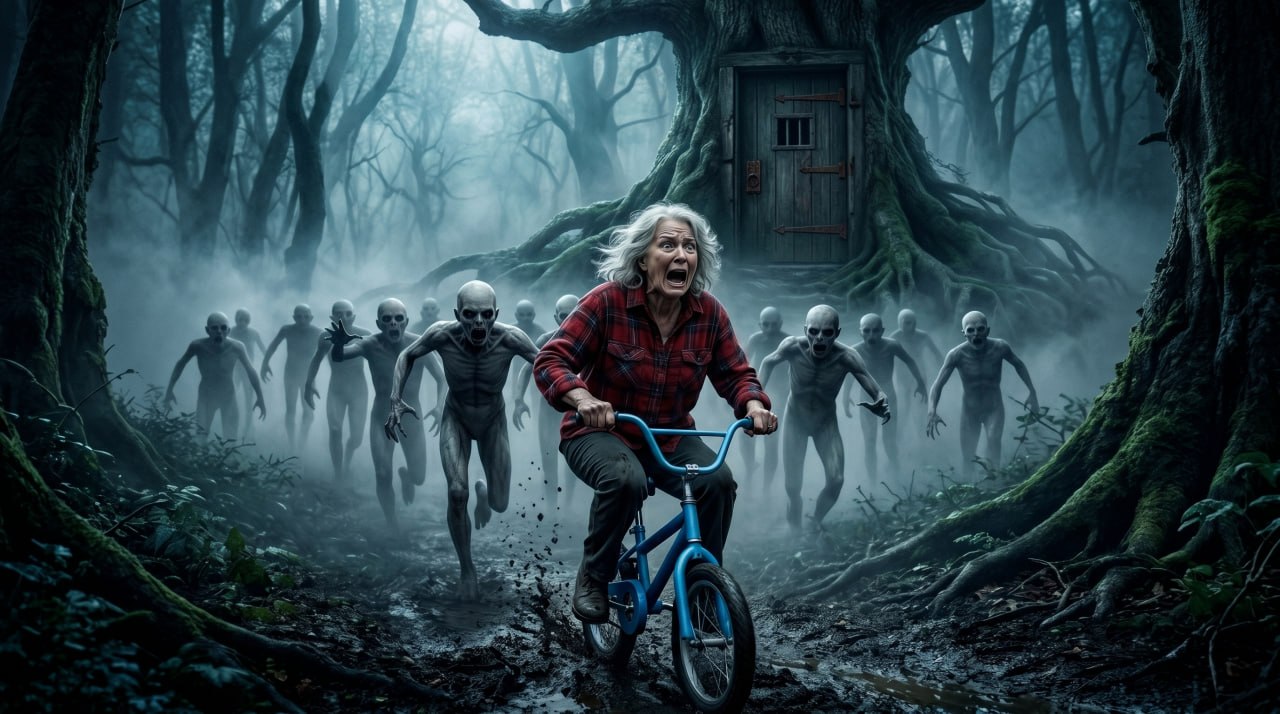
Elias Thorne’s last journal entry, dated October 17, was terse and frantic. It began: “The feeling persists. Not animal. Something… different.” He recounted a restless night, disturbed by an indiscernible rustling just beyond the perimeter of his tent, too regular for wind, too quiet for deer. Around dawn, a distinct, rhythmic thudding sound began, distant but persistent, seemingly moving parallel to his position. He packed his camp with unusual haste, abandoning his planned botanical work. The thudding grew louder, closer. He wrote of a ‘growing dread’ and the decision to move quickly back towards the east, away from the source of the sound, which he now perceived as a deliberate pursuit.
His retreat became a flight. He pushed through dense undergrowth, the sounds of his own labored breathing punctuated by the relentless, unseen rhythm behind him. The forest, once a source of peace, became a labyrinth of shadows and increasing menace. Then, around mid-morning, he stumbled into a small, eerily clear glade, untouched by the surrounding thicket. In its center, standing utterly alone, was the door. It was roughly seven feet tall, four feet wide, crafted from dark, heavily distressed oak, bound by thick bands of wrought iron that bore no discernible maker’s mark. There was no frame, no wall, no structure to support it. It simply stood, perpendicular to the forest floor, its surface weathered to a near-black patina. A single, heavy iron ring served as a handle. Thorne’s last written words described it: “Door. No wall. Impossible. The thudding… it’s closer. Must…”
The Aftermath
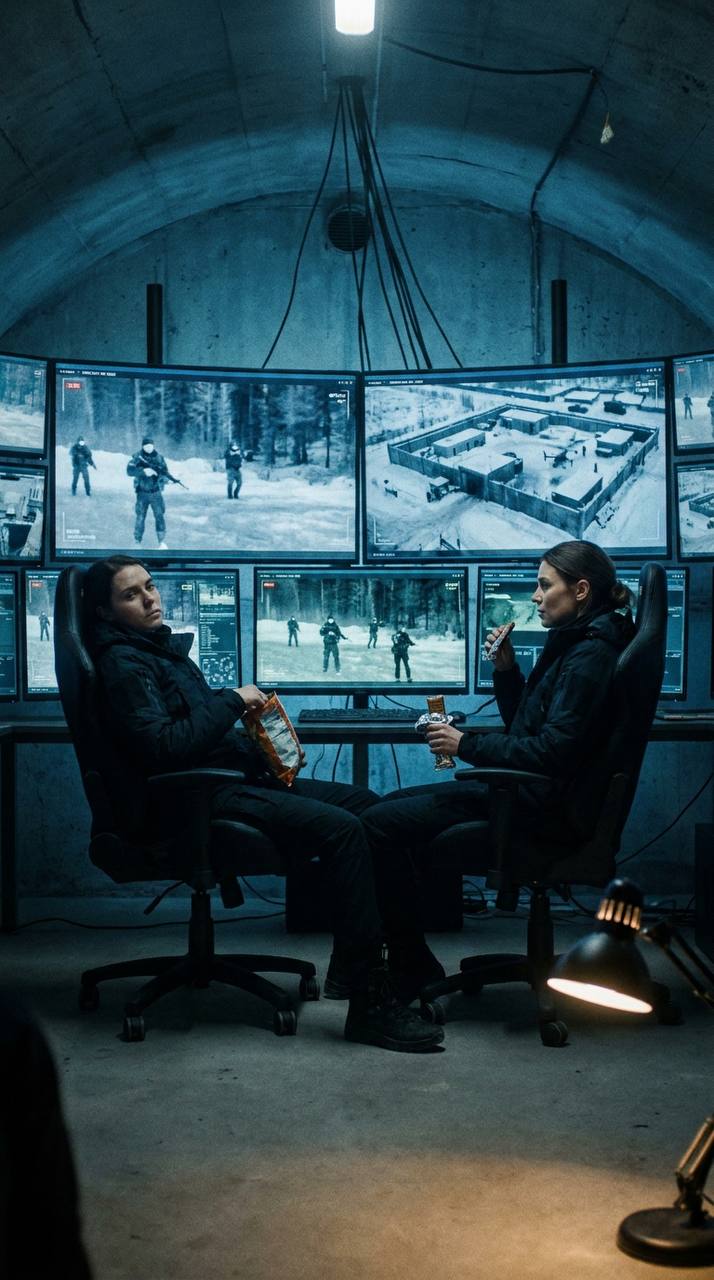
When Thorne failed to check in with his university contact on October 18, standard protocol initiated a search. His vehicle was found parked at the Blackwood Trailhead, just as expected. His campsite, located three miles deeper than his last known coordinates, was discovered on October 20 by a ground search team led by Sheriff Maeve O’Connell. It was orderly, almost pristine. His tent was neatly rolled, cooking gear packed. The only anomaly was his satellite phone, lying exposed on a rock, its battery dead, and his journal, placed carefully atop his packed backpack. No signs of struggle, no disturbed earth, no discarded items suggesting a hasty departure. It was as if he had simply finished packing and then, without a trace, walked away.
Sheriff O’Connell, a veteran of rural disappearances, found the scene unsettling. “There was no mud, no scuff marks, nothing to suggest he was running,” she stated in her initial report. “But the journal… the words were clearly written in duress.” Search dogs were brought in, but their tracking ability was compromised by a sudden, heavy rainfall that began shortly after Thorne’s estimated time of disappearance. They lost his scent within a hundred yards of the campsite, near the edge of a particularly dense section of ancient pines. The glade with the door, as described in his final journal entry, was never located, despite extensive grid searches by both ground teams and aerial surveillance.
Echoes and Legends
Blackwood National Forest has long been a place of local lore and unexplained phenomena. Old-timers in the nearby hamlet of Raven’s Hollow spoke of the ‘Whispering Woods,’ a name derived from strange, disembodied voices reported by hunters and hikers deep within its older sections. There were scattered historical accounts of individuals venturing into the Blackwood and never returning, dating back to the late 19th century. These were often attributed to the inherent dangers of wilderness – getting lost, animal attacks, exposure – but a persistent thread in the local narrative involved ‘places that aren’t there when you look for them again.’
Ranger Graham Pierce, a lifelong resident and park veteran, recalled vague stories from his grandfather about ‘phantom architecture’ appearing in the deepest parts of Blackwood. “He’d say sometimes you’d see a cabin, or a well, or even a fence line, where there was no reason for it to be,” Pierce explained during the initial investigation. “And if you tried to find it the next day, it’d be gone. Just the trees.” He dismissed these as campfire tales, but the Thorne case prompted him to reconsider. Some of the older, rarely consulted forest maps indeed had anomalies—small, unnamed clearings that seemed to shift between different editions, or areas where the contours simply dissolved into blank space.
The Door’s Legacy
The most persistent aspect of the Thorne disappearance remains the ‘door.’ Skeptics argue it was a hallucination, a product of exhaustion and fear. Others suggest a metaphor for a mental break or even a cleverly constructed cover for a planned disappearance. However, the meticulous nature of Elias Thorne, his scientific background, and the tangible evidence of his journal entries lend credibility to his account. Furthermore, in the weeks following the extensive but fruitless search, several new reports surfaced. Two separate hikers, unconnected to each other or the Thorne case, reported seeing an inexplicable, freestanding door in the general vicinity of Whisperwind Ridge. Both accounts were similar in description to Thorne’s – dark wood, iron bands, no discernible structure around it. In both instances, by the time authorities arrived, the door was gone.
Sheriff O’Connell’s official report concluded with a finding of ‘presumed lost,’ a common classification for wilderness disappearances with no body recovered. However, she privately acknowledged the oddity of the case. “His equipment was perfectly maintained, his navigation skills were excellent,” she confided years later to a local journalist. “He wasn’t lost in the conventional sense. He was… removed.” The precise coordinates Thorne mentioned in his frantic, cut-off satellite phone call – a location roughly two miles from his campsite, deep within the glade he described – yielded nothing but dense forest upon repeated investigation.
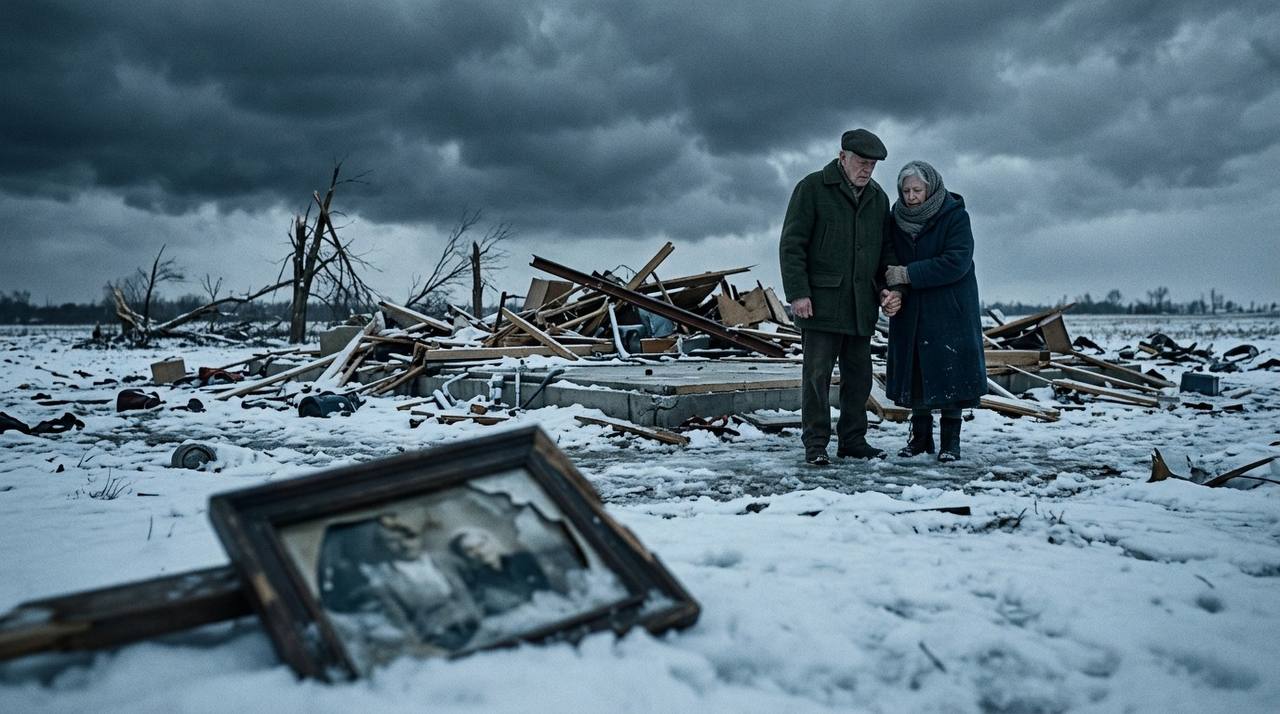
The Blackwood National Forest has since remained a site of quiet speculation. The door, if it ever truly existed, has not been definitively seen or photographed since the Thorne disappearance, nor have any other hikers been reported missing in its immediate vicinity. Elias Thorne’s fate remains an open question, a story whispered among those who venture deep into the ancient woods, a cautionary tale of what might lie beyond the veil of the familiar, perhaps just a few paces past an impossible door.
Notes & sources
- · Story is fictional. Names, locations, and events are invented.
This story is a dramatized retelling. Some details, names, and locations have been changed or invented for narrative purposes.