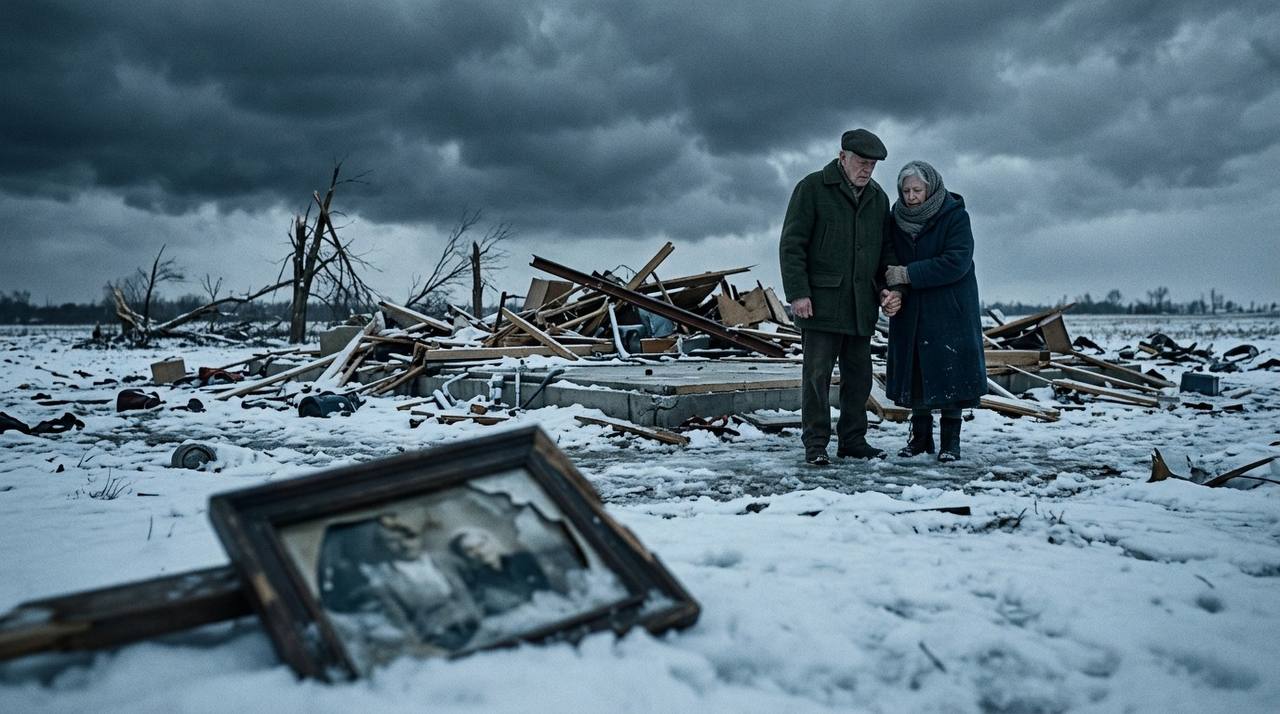
On October 17th, Dr. Aris Thorne, a respected independent hydrologist, disappeared from the remote Sundered Valley in the western foothills of the Oakhaven Range. His vanishing coincided with the critical failure warnings issued for the Redwater Dam, an aging hydroelectric structure situated directly upstream. For Sheriff Elias Vance of the Oakhaven County Sheriff’s Department, what began as a missing persons case quickly escalated into a desperate race against an environmental catastrophe, where every second and every decision carried the weight of potential disaster, both for Thorne and the valley itself.
The Redwater Dam Project
The Redwater Dam, constructed in 1938, was an artifact of early 20th-century engineering, a concrete behemoth that had powered the regional grid for decades. Its structural integrity had been a recurring concern for local authorities and environmental groups for years. Cracks in the spillway, detected during routine maintenance in 2019, had worsened incrementally, leading to a series of urgent, though largely ignored, repair recommendations. By early October, satellite imagery and ground sensors indicated an alarming acceleration in the dam’s deterioration, particularly along its eastern abutment where the rock was known to be fractured.
Dr. Thorne had initially been contracted by the ‘Valley Keepers’ conservation society, not to assess the existing dam’s failure, but to study the ecological impact of a proposed expansion project further downstream. His work involved mapping subterranean water flows and analyzing sediment distribution in the lower valley, areas far removed from the immediate danger zone of the Redwater Dam itself. However, his last known communications indicated a shift in his focus. On October 16th, he sent a cryptic email to his colleague, Dr. Lena Petrova, mentioning “anomalous readings” near the old logging trails and a “geological instability not tied to the dam’s known issues.” This email arrived hours before the official declaration of the Redwater Dam’s imminent collapse, which gave authorities a 72-hour window for evacuation.
Vanishing Point
Sheriff Vance’s office was first alerted to Thorne’s disappearance on the afternoon of October 18th, when Dr. Petrova reported him overdue from a planned check-in. Thorne’s battered utility truck was discovered later that day by a forestry patrol, abandoned on a narrow, overgrown logging trail miles from his designated survey area. The location itself was curious, nestled deep within a section of the valley known for its treacherous terrain and dense, second-growth forest, well off the main access roads and far from any established hiking paths.
The truck’s interior offered few immediate clues. Standard field gear—rain slickers, dried rations, a backup headlamp—remained. However, a specific subset of his equipment was missing: his ruggedized satellite phone, a specialized geological laptop, and a portable ground-penetrating radar unit. This suggested Thorne had left the vehicle with intent, not in an emergency. The ground around the truck, soaked by two days of intermittent rain, offered no clear footprints. Initial search efforts by local Search and Rescue (SAR) teams were hampered by the worsening weather. Heavy, cold rain began to fall, accelerating the rise of the river, already swollen by seasonal precipitation. The Redwater’s waters, usually a clear, swift current, now ran brown and turbulent, carrying a growing volume of debris. Sheriff Vance, a man accustomed to the quiet rhythm of rural law enforcement, felt an unfamiliar pressure mounting. The urgency of the dam situation meant that every hour spent searching for Thorne was an hour closer to a potential disaster that could engulf not only the valley but also the search teams themselves.
The Urgent Search
As the 72-hour countdown to the Redwater Dam’s predicted failure began, the search for Dr. Thorne transformed. What might have been a protracted missing persons investigation became a high-stakes recovery mission, complicated by the very landscape threatening to erase all evidence. Engineers from the state’s Department of Water Resources projected that a full breach would submerge the Sundered Valley under more than fifty feet of water in some areas, rendering any subsequent search impossible. The valley floor, home to scattered cabins and a network of old mining tunnels, would become a new, deep lake.
Search dogs, brought in from the regional SAR task force, initially picked up Thorne’s scent near his abandoned truck. They followed it for several miles along the increasingly difficult terrain of the logging trail, which eventually degraded into a narrow, winding deer path. The scent trail abruptly ended near the precipice of the Serpent’s Gorge, a deep, narrow chasm carved by a tributary of the Redwater River. The sheer rock faces and the roaring current at the bottom made further ground pursuit impossible. SAR personnel, rappelling into the gorge, found no immediate trace of Thorne, only the relentless spray from the churning water below.
Approximately a mile upstream from the gorge, a small, hastily packed camp was discovered. It consisted of a tarp strung between two ancient firs, a cold campfire, and an empty energy bar wrapper. The items suggested recent occupation, perhaps within the last 24 to 36 hours. But Thorne himself was absent. No sleeping bag, no personal effects. It was as if he had simply stepped away for a moment and never returned. Just as a secondary SAR team was attempting to establish a more permanent base at the camp, a sudden, violent rockslide erupted from an unstable cliff face above, triggered by the incessant rain. Boulders the size of small cars tumbled into the ravine, narrowly missing the team. The incident forced an immediate evacuation of the sector, costing precious hours and denying access to a potentially critical area. This
Notes & sources
- · Story is fictional. Names, locations, and events are invented.
This story is a dramatized retelling. Some details, names, and locations have been changed or invented for narrative purposes.