On the evening of October 17, 2018, Dr. Aris Thorne, a senior bioinformatics researcher at the Atrium Research Facility nestled deep within the Green Mountains of Vermont, made a decision. It was not a deliberate, planned choice to abandon their life, but rather a sudden, reactive necessity. The facility, a cluster of low-slung, Brutalist structures powered by its own geothermal plant, had always felt insulated, almost monastic. That night, the insulation felt like a trap.
Thorne had spent the day, as was customary, in the sterile quiet of their lab, analyzing complex genomic sequences related to novel microbial life forms discovered in deep-sea vents. The work was precise, often tedious, and rarely yielded anything beyond incremental advancements. However, for the past two weeks, Thorne had been diverting a portion of their processing power, unauthorized, to an older, seemingly innocuous data set: environmental readings collected a decade prior from a now-decommissioned geological survey site near the Canadian border. A colleague, Dr. Lena Petrova, who had briefly worked on that project before transferring to a private biotech firm in Boston, had mentioned an ‘unusual anomaly’ in passing during a rare social gathering months earlier. Petrova had laughed it off, but something in her tone, a slight tension around her eyes, had lingered with Thorne.
The Anomaly
Thorne’s initial curiosity regarding the old geological survey data was benign. Petrova had described a peculiar energy signature, briefly detected and then dismissed as equipment malfunction. Thorne, with access to more advanced analytical tools, ran a series of algorithms designed to filter out instrument noise and atmospheric interference. What emerged was not a glitch. It was a persistent, structured signal, faint but undeniable, buried beneath layers of natural background radiation. It pulsed with a regularity that suggested artificiality, not natural geological activity. The signal’s origin point, according to Thorne’s triangulation, was not deep underground, but unsettlingly close to the surface, precisely where a series of small, unmarked cabins, now abandoned, had once stood. These cabins were part of a short-lived experimental settlement initiative funded by a consortium of private entities, including the very corporation Petrova now worked for.
Further analysis on that specific October evening revealed something more disturbing. The energy signature was not static. It had changed, subtly but definitively, just weeks before Petrova’s transfer and the subsequent, swift decommissioning of the survey site. It had shifted in frequency, a pattern of decay and re-emission that mirrored, unsettlingly, certain advanced data encryption protocols Thorne had encountered in specialized cybersecurity journals. The implication was clear: the ‘anomaly’ was not environmental. It was a covert communication, or perhaps, a data transfer. And its abrupt cessation, coinciding with Petrova’s departure, suggested a cover-up. Thorne tried to reach Petrova via email, then phone, but received no response. Her last known contact number was disconnected. The private firm stated she was on an extended sabbatical and could not be reached.
Thorne felt a prickle of unease. They tried to trace Petrova’s digital footprint. It was as if she had been systematically erased. No social media updates since her transfer, no professional publications, no mentions in industry news. This level of digital hygiene was unusual for someone as prolific as Petrova. As the laboratory hummed around them, Thorne felt a different kind of silence descend, one that was not peaceful. It felt deliberate.
The Silent Departure
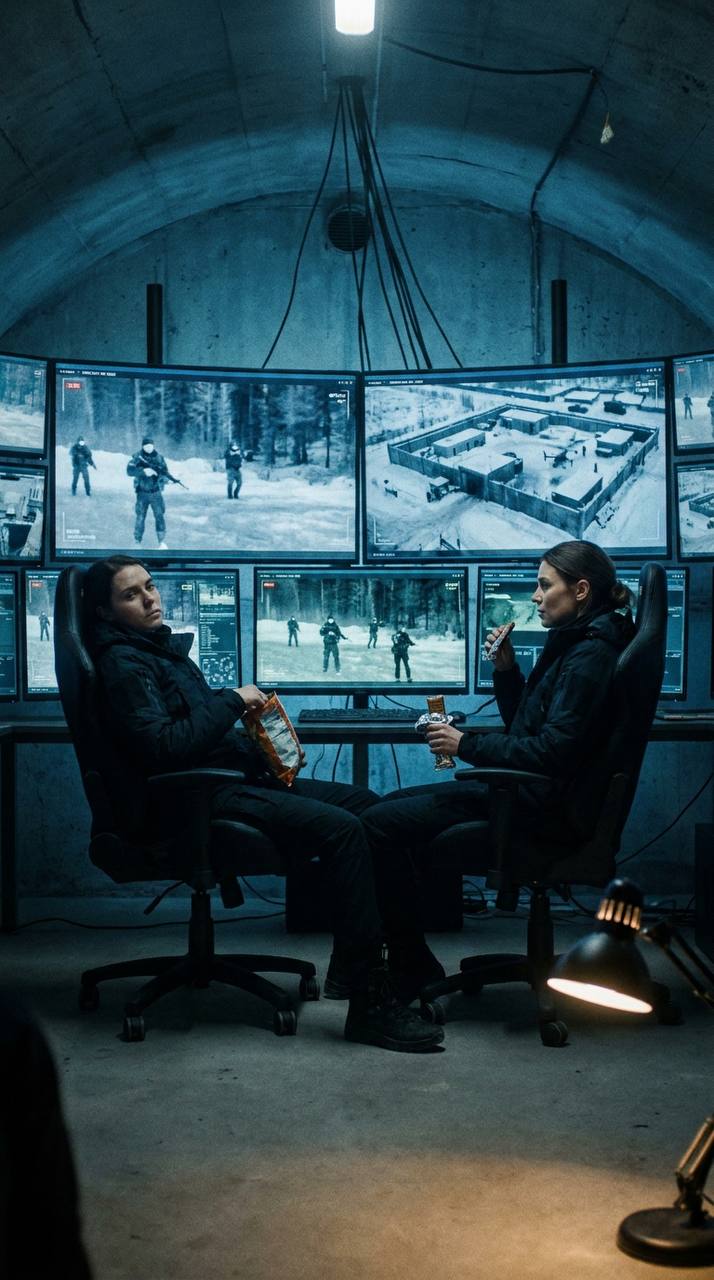
At precisely 10:47 PM, Thorne saw the first sign. A flicker on the internal security feed, visible on a small monitor in their peripheral vision. A maintenance technician, unfamiliar to Thorne, was walking down a restricted hallway leading to the facility’s server room. The technician wore a standard Atrium jumpsuit, but their gait was too stiff, too purposeful. Thorne had worked at Atrium for seven years; they knew every regular employee by sight, if not by name. This person was new, and moving with an authority that belied their stated role. A cold certainty settled in Thorne’s stomach: someone was inside the system, or preparing to be. They were coming for the data. Or for Thorne.
There was no time for deliberation. Thorne quickly secured their workstation, initiating a deep-wipe protocol on their local drives – a standard procedure for sensitive research, but now a desperate act of concealment. They grabbed a small, worn backpack from beneath their desk, already packed with essentials for a planned weekend hiking trip: a satellite phone, a high-capacity power bank, a topographical map of the Green Mountains, a compact first-aid kit, and a small sum of cash. These items, intended for recreation, now represented their only potential lifeline. They changed into hiking boots and a weather-resistant jacket, moving with a silent efficiency born of sudden, stark terror.
Exiting the facility required navigating a labyrinth of service tunnels, a route Thorne had only used once during a fire drill. The air was cool and smelled of damp earth and ozone. They emerged near the west perimeter fence, a section rarely monitored due to its proximity to a steep, rocky ravine. The night was moonless, the air crisp with the promise of a late autumn frost. Thorne scaled the fence, tearing a sleeve on a jagged wire. The pain was a dull counterpoint to the adrenaline surging through their veins. They landed silently on the other side, disappearing into the dense pine forest that bordered the facility grounds. The sounds of the facility – the distant hum of generators, the faint whir of HVAC systems – quickly faded behind them, replaced by the rustle of dry leaves underfoot and the rhythmic thud of their own heart.
Through the Wilderness
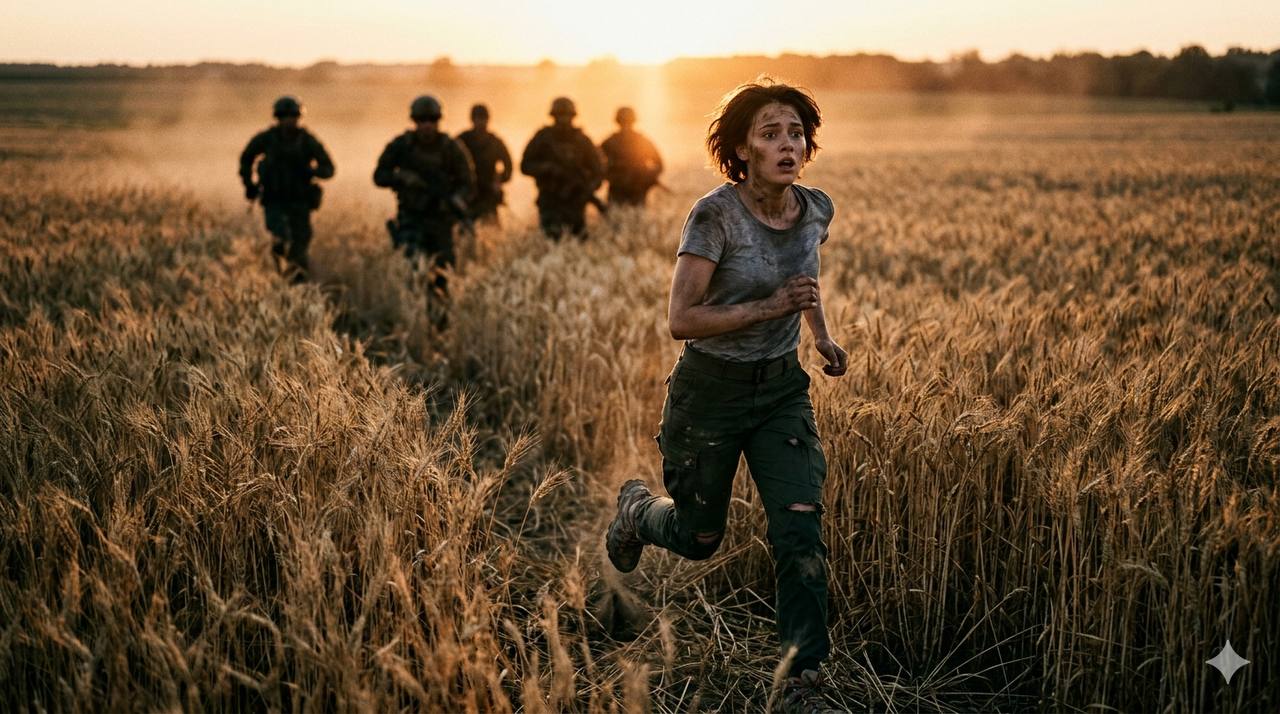
For the first 24 hours, Thorne moved almost continuously. They followed game trails, avoided open clearings, and crossed streams to mask their scent and footfall. The satellite phone, a relic of their remote field work days, remained off, its signal too traceable. The food in their pack – energy bars, dried fruit – became their sole sustenance. Sleep was snatched in short, restless intervals, often curled beneath the low branches of a spruce, the forest floor cold and unyielding. The constant vigilance sharpened their senses, turning every snapping twig, every hoot of an owl, into a potential threat. Paranoia became a guiding principle. They imagined the silent pursuers, their methods unknown, their resources vast, fanning out across the mountains.
On the second day, a small, single-engine plane flew overhead, circling slowly, its drone a persistent irritant. Thorne dropped to the ground, pressing themselves into a thicket of rhododendrons, remaining motionless until the sound receded into the vastness of the sky. It was a recon flight, Thorne surmised, systematic and patient. They were being hunted. The anonymity of the wilderness, once a comfort, now felt like a fragile illusion. The sheer scale of the landscape was both a shield and a prison. There was no one to call, nowhere to go that felt truly safe. The implication of the encrypted signal, the sudden silence of Lena Petrova, weighed heavily. Thorne was not merely fleeing. They were protecting something, though they were not entirely sure what.
By the third day, exhaustion began to set in. Thorne found a dilapidated hunting cabin, long abandoned, its windows boarded up, its single room smelling of mildew and old wood smoke. It offered rudimentary shelter from the persistent drizzle that had begun to fall. Inside, a tattered copy of a book on cryptology lay open on a rickety table, its pages brittle with age. It was a strange coincidence, or perhaps, a sign. Thorne studied the complex diagrams and equations, seeking a deeper understanding of the patterns they had observed. The cabin, though temporary, offered a brief respite from the relentless physical and psychological strain of constant flight. Thorne tried to ration their water, collecting rainwater in a small tarp, filtering it through a piece of cloth.
The Near Miss at Blackwood Creek
The temporary peace of the cabin lasted less than twenty-four hours. Thorne was awakened by a faint, rhythmic crunching sound outside, too heavy for an animal, too deliberate for the wind. Footsteps. They were slow, methodical, approaching the cabin from the east. Thorne froze, listening, their hand instinctively reaching for the small multi-tool in their pack. There was a pause, a moment of absolute stillness, then a soft metallic click from the cabin’s rear wall. Someone was trying the old, rusty latch on the back door. Thorne knew the cabin offered no real defense. Its walls were thin, its floorboards creaked with every shift of weight. To engage was to be caught. To stay was to invite capture.
Moving with practiced silence, Thorne slipped out through a loose floorboard near the fireplace, a hidden escape route they had discovered earlier. They crawled through the narrow space beneath the cabin, emerging on the opposite side, into the dense undergrowth. The air was colder now, the drizzle turning into a fine mist. They heard the front door of the cabin creak open, then the low murmur of voices, indistinct but undeniably human. Thorne held their breath, their muscles aching, listening to the methodical search of the small space. They were professional, efficient, leaving no corner unexamined. Thorne heard a quiet exhalation, a sound of frustration, then the sound of the front door closing. The footsteps moved away, receding back into the forest. They had been close, too close. Thorne remained hidden for another hour, the chill seeping into their bones, before daring to move again.
The Unseen Pursuit Continues
The encounter at Blackwood Creek cabin solidified the reality of Thorne’s situation: they were not merely evading detection; they were actively being hunted. The pursuers were organized, well-equipped, and relentless. Their methods were quiet, their presence almost ethereal, leaving little trace beyond a lingering sense of dread. Thorne continued their journey south, deeper into the less-traveled sections of the Green Mountains, relying on fragmented memories of old logging roads and isolated hiking trails. The knowledge they possessed, or rather, the questions it raised, had transformed them from a reclusive scientist into a fugitive.
Days turned into weeks. The landscape shifted from the vibrant golds and reds of autumn to the stark, skeletal greys of early winter. Snow began to fall, light at first, then heavier, covering their tracks, but also making travel more arduous. Thorne survived on what little they could forage, supplemented by dwindling rations. The satellite phone remained off, a last resort. The mystery of the structured signal, the fate of Lena Petrova, and the identity of their relentless pursuers remained unsolved, a silent shadow stretching across the vast, unforgiving wilderness. The pursuit continued, a silent, unseen drama playing out against the backdrop of the mountains, with no apparent end in sight.
Notes & sources
- · Story is fictional. Names, locations, and events are invented.
This story is a dramatized retelling. Some details, names, and locations have been changed or invented for narrative purposes.