On the afternoon of May 17, 2018, Arthur Miller, his wife Eleanor, and their seven-year-old son Leo were enjoying the unseasonably warm air in their backyard garden in Harmony Creek, Kansas. The sky above their modest farmhouse, typically a vast expanse of blue, had begun to churn with an unnatural, bruised purple-green. By 2:40 PM, the local weather alert system issued a severe tornado warning for their county, urging immediate shelter. Within minutes, the Miller family would descend into the earth, seeking refuge in their storm bunker, and would not be seen again.
The Approaching Storm
The Millers had lived in Harmony Creek for twelve years. Arthur, a quiet man who managed a local hardware store, had inherited the property from his grandfather. The storm bunker, a concrete-reinforced structure dating back to the 1950s, was a relic of that inheritance, a sturdy testament to a bygone era’s anxieties. It was situated about fifty feet from the back porch, partially submerged beneath a grassy mound, its steel-plated door flush with the earth. Eleanor, a freelance graphic designer, had always found its presence reassuring, a practical safeguard in a region accustomed to volatile weather.
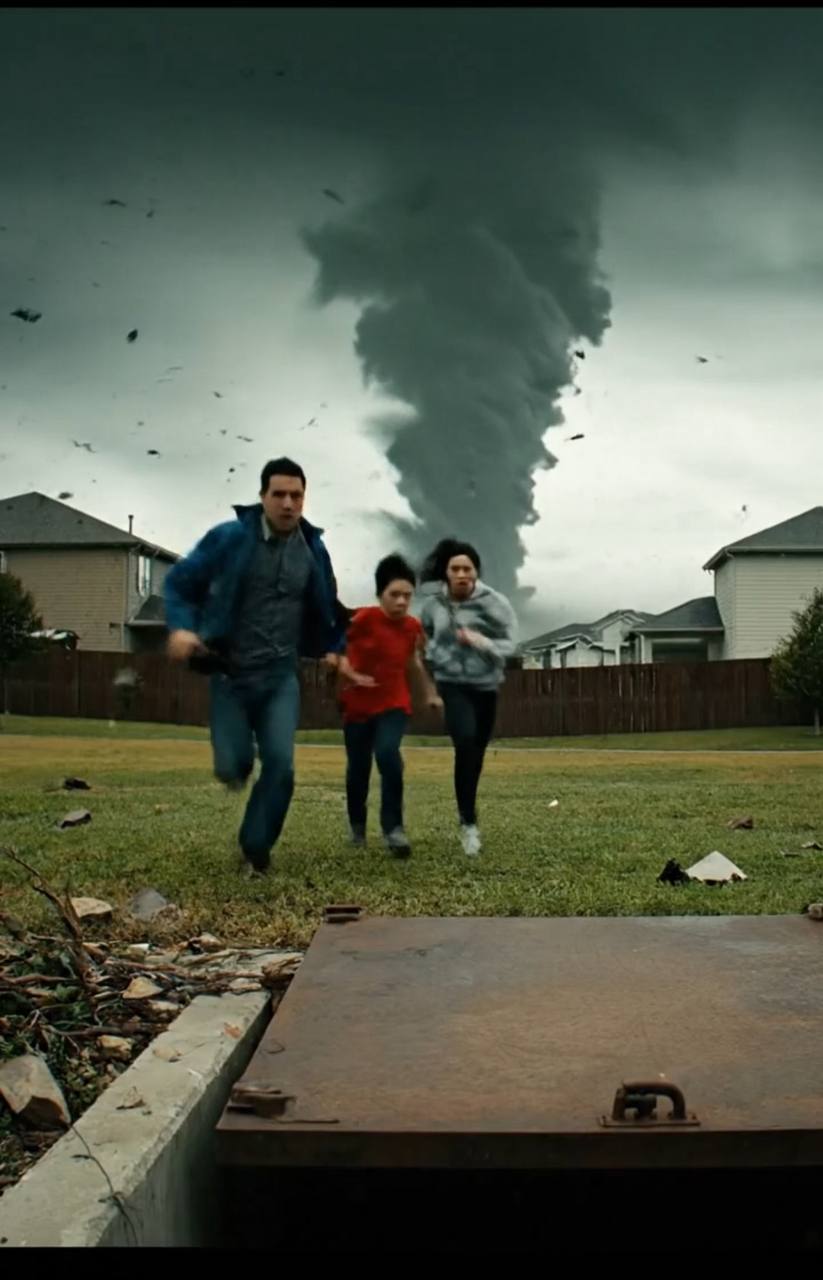
That Thursday began like many late spring days, with a deceptive calm. Leo, home from school with a mild cold, was attempting to coax a reluctant earthworm into a glass jar. Eleanor was weeding her patch of heirloom tomatoes, while Arthur tightened a loose fence post. The first sign of trouble was the sudden, oppressive stillness of the air, followed by a rapid drop in temperature. Then came the siren, a mournful wail that cut through the rural quiet. Arthur, already scanning the horizon, saw the wall cloud forming rapidly to the southwest. There was no time to waste.
“Bunker! Now!” he yelled, his voice tight with urgency. Leo dropped his jar and ran, his small legs pumping. Eleanor, abandoning her trowel, grabbed Leo’s hand as they sprinted towards the green mound. The wind began to pick up, carrying dust and the scent of rain. Arthur was right behind them, fumbling with the heavy latch on the bunker door. He pushed it open, revealing the dark, cool concrete stairs descending into the earth. “Go, go, go!” he urged, ushering his wife and son down.
Sealed Below
Inside the bunker, the air was cool and smelled faintly of damp earth and stored goods. The single bulb, powered by a battery inverter, cast a weak, yellow glow over the small, utilitarian space. Shelves lined the walls, stocked with canned food, bottled water, a first-aid kit, a battery-powered radio, and a stack of board games for Leo. A worn cot occupied one corner, and a small, folding card table sat in the center. Arthur slammed the heavy steel door shut, the sound a dull thud that vibrated through the concrete. He then engaged the internal locking mechanism, a series of thick steel bolts that slid into place with a series of metallic clunks.
Above them, the world erupted. The sound of the tornado was exactly as described in countless warnings: an immense, roaring freight train passing directly overhead, accompanied by the distinct whine of twisting metal and splintering wood. The bunker vibrated, a low, continuous rumble that made the small bulb flicker. Dust sifted down from the ceiling seams. Leo, initially brave, buried his face in Eleanor’s side, whimpering softly. Arthur held them both, his own knuckles white, listening to the terrifying symphony of destruction that raged just feet above their heads. He tried the radio, but only static emerged.
After what felt like an eternity, the roar began to recede, fading into a distant, angry growl. The vibrations lessened, then ceased. A profound, unnatural silence descended, broken only by Leo’s soft breathing and the faint drip of water somewhere in the bunker’s unseen depths. Arthur checked his watch: 3:15 PM. The ordeal, at least the immediate threat, seemed to be over. He attempted to disengage the internal lock. The bolts retracted with a familiar click. He pushed against the door. It did not budge.
The Unyielding Door
Initial attempts to open the bunker door were calm, methodical. Arthur, a man of practical solutions, assumed debris had fallen against it. He pushed, pulled, and even kicked at the steel plate, but it remained firmly sealed. Eleanor joined him, her smaller frame adding little leverage. Leo, sensing the shift from relief to concern, watched them with wide eyes. Arthur then tried the hand-crank ventilation system, turning it vigorously. The air moved, a dry, slightly metallic breeze, confirming the system was operational. He reasoned that if air could pass, a crowbar, which he knew was stored inside, might offer enough force. He retrieved it from a tool chest and spent another twenty minutes prying at the doorframe, but the steel was too thick, the seal too tight. The door would not yield.
As the hours passed, the family’s composure began to fray. Night fell, plunging the bunker into deeper isolation. They ate canned peaches and crackers, rationing water from the stored barrels. Arthur tapped on the ceiling, hoping to attract attention from any potential rescuers, but only the hollow sound of concrete answered. He tried the radio again, painstakingly turning the dial, but still, only static. The realization that they were trapped, truly trapped, began to settle in. Eleanor tried to maintain a cheerful demeanor for Leo, reading from a dusty copy of Treasure Island they found on a shelf, but her voice occasionally trembled.
Days blurred into a monotonous cycle of rationing, waiting, and the slow, insidious creep of hopelessness. Arthur continued to attempt the door each morning, his efforts growing more desperate, his shoulders aching. Eleanor’s once vibrant energy dimmed, her eyes often fixed on the flickering bulb, as if willing it to reveal an exit. Leo, usually an active child, grew quiet, spending hours sketching on a notepad with a blunt pencil, drawing intricate mazes with no clear way out. Their water supply dwindled faster than anticipated, a consequence of the bunker’s dry air and their growing anxiety. Conversations grew sparse, punctuated by the strained silence that only prolonged confinement can breed.
An Unsettling Discovery
Twenty-six days after the tornado, on June 12, a search-and-rescue team finally reached the Miller property. The farmhouse was a splintered wreck, but the storm bunker, though partially buried under a mound of earth and shattered lumber, appeared largely intact. The team, led by Sheriff Thomas Vance, had been systematically checking all known storm shelters in the affected areas. After several hours of clearing debris and digging, they located the steel door. It was still sealed shut from the inside, the external latch untouched. Using heavy hydraulic tools, they finally forced the door open.
The bunker was found empty. The cot was neatly made. The card table held the half-finished game of Candyland that Leo had been playing, its pieces scattered as if paused mid-turn. Cans of food, mostly depleted, were stacked neatly on the shelves. One of the water barrels was empty, the other nearly so. Leo’s notepad lay open on the cot, displaying a drawing of three stick figures holding hands, surrounded by a maze. No farewell note, no signs of struggle, no evidence of forced entry from within or without. The internal locking mechanism was found disengaged, the bolts retracted, exactly as Arthur had left them after his last attempt to open the door.
Sheriff Vance immediately launched a full investigation, classifying it as a missing persons case under highly suspicious circumstances. Forensic teams swept the bunker, finding only the Miller family’s fingerprints and genetic material. There were no hidden passages, no overlooked exits. The concrete walls were solid, the floor undisturbed. The only conclusion supported by the physical evidence was that the Millers had been inside, had consumed most of their provisions, and then, somehow, had simply ceased to be there. The property was scoured, local ponds dragged, but no trace of Arthur, Eleanor, or Leo Miller was ever found. The Harmony Creek bunker, once a symbol of safety, became a sealed tomb of an unexplained void, its silent steel door forever guarding the secret of a family’s impossible vanishing act.
Notes & sources
- · Story is fictional. Names, locations, and events are invented.
This story is a dramatized retelling. Some details, names, and locations have been changed or invented for narrative purposes.