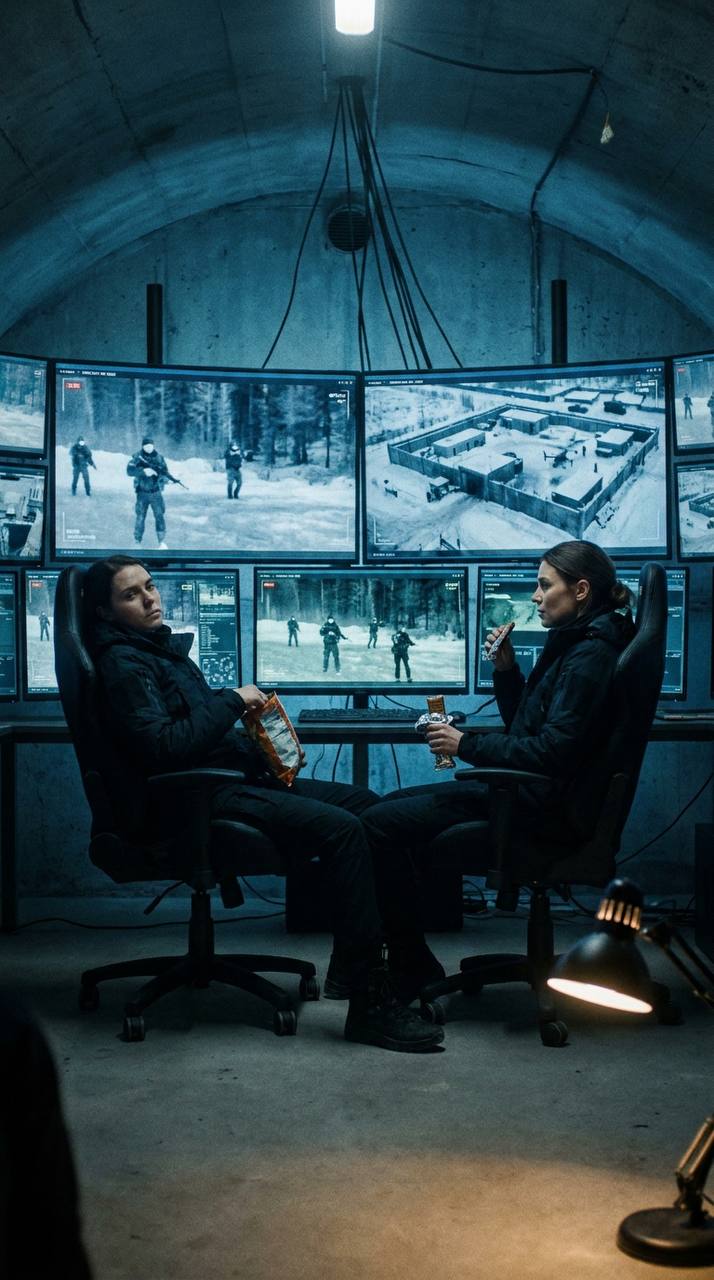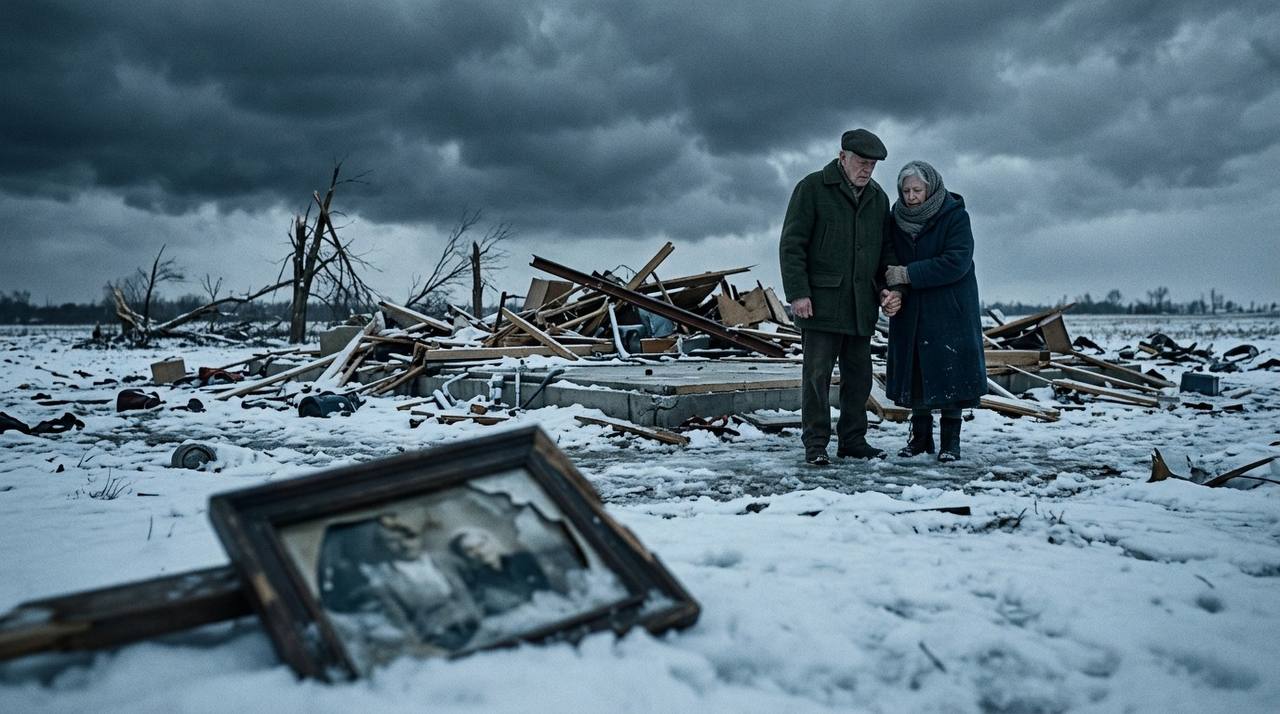
On the evening of October 14, 1943, as the crackle of distant gunfire mingled with the nearer shouts of Volkovian soldiers, sixteen-year-old Elara Vance found herself trapped within the crumbling grandeur of Oakhaven’s Kestrel Estate. The heavy boots of the occupying forces echoed through the ancestral halls, their search for a specific, undisclosed objective growing increasingly aggressive. With no other escape, her only recourse was an act of desperate impulse: to disappear into a space that had remained undisturbed for generations, a space that held secrets far older and more dangerous than the conflict raging outside.
The Pursuit and the Panel
The Kestrel Estate, a sprawling manor perched on a low hill overlooking the town of Oakhaven, had once been a symbol of local prosperity. Now, under the shadow of the Veridian Conflict, it was a strategic point for the Volkovian forces, who had occupied the region for nearly two months. Elara, a distant relative of the Kestrel family and a ward of the now-absent groundskeeper, had been left behind in the chaotic evacuation. She had spent weeks navigating the estate’s labyrinthine passages, scavenging for food, and avoiding patrols. But on this particular evening, the soldiers’ presence was different. Their search was meticulous, focused. They were no longer merely patrolling; they were hunting.
Elara had been hiding in the west wing’s disused library, a vast room choked with forgotten tomes and the scent of decay. Footsteps approached, distinct and heavy. A guttural command in Volkovian. She pressed herself against a tall, carved oak bookcase, her breath held. As the library door creaked open, revealing the harsh beam of a soldier’s lantern, her eyes darted across the wall beside her. She had noticed it days before: a faint seam in the wood paneling, almost invisible, easily dismissed as a structural anomaly. In that moment of acute terror, it became her singular focus. With trembling fingers, she pushed. The panel, surprisingly, gave way with a faint click, revealing a narrow, darkened aperture.
She squeezed through, the wood scraping against her coat. The panel swung back into place with a soft thud, perfectly sealing the opening. The sudden cessation of light and sound was absolute. She stood in suffocating darkness, listening to the soldiers ransack the library, their frustrated shouts gradually fading as they moved on. The air was thick with dust and a stale, metallic odor. Her heart hammered against her ribs. She was safe, for now, but in an unknown, confined space.
The Sanctuary of Dust
After an hour of absolute stillness, Elara risked a tentative exploration. Her hands brushed against rough-hewn stone walls, then encountered a descending stone staircase. The stairs were uneven, slick with dampness, and clearly unused for a considerable time. The descent was short, perhaps a dozen steps, before her foot met a level floor. As her eyes adjusted to the residual light filtering through imperceptible cracks, a shape emerged from the gloom: a small, almost perfectly circular chamber, roughly ten feet in diameter. It was not a cellar or a mere storage space. It was a room, meticulously constructed and hidden.
The chamber was dominated by a heavy, ornate desk crafted from dark, lacquered wood, positioned centrally. On its surface lay a single, leather-bound journal, its cover embossed with an unfamiliar, stylized raven symbol. Beside it, a stack of parchment scrolls, tied with faded ribbons, and a small, intricately carved wooden box. Two high-backed chairs, upholstered in what might have once been crimson velvet but was now a dull, dusty brown, flanked the desk. Along the curved walls, built-in shelves held more scrolls, a few ceramic amphorae, and a collection of unusual metallic instruments, their purpose obscure. The air was cool, dry, and carried the distinct scent of old paper and something vaguely mineral. This was not a place of mundane utility; it was a sanctuary of secrets.
Elara spent her first night huddled in one of the chairs, too overwhelmed and exhausted to do more than observe. The silence here was profound, a stark contrast to the distant echoes of war. As dawn broke, a faint, almost imperceptible glow emanated from a cleverly concealed skylight high above, revealing more details. The raven symbol appeared repeatedly: etched into the desk, woven into the fabric of the chairs, even discreetly carved into the handles of the wooden box. It was a mark of identity, a sigil of the chamber’s unseen inhabitants.
Whispers from the Past
Days turned into weeks. Elara learned to ration the meager supplies she had brought and found a hidden cistern providing fresh water. The soldiers eventually vacated the main parts of the estate, their immediate objective apparently unfulfilled, though patrols continued around the perimeter. Elara remained hidden, cautious, and began to cautiously examine the chamber’s contents. The journal, written in a precise, almost calligraphic hand, was primarily in an archaic form of the local dialect, punctuated by passages in an unfamiliar cipher. It dated back over two centuries, detailing meetings, observations, and cryptic instructions.
From what she could decipher, the journal belonged to a man named Silas Kestrel, an ancestor of the estate’s builders. It spoke of
Notes & sources
- · Story is fictional. Names, locations, and events are invented.
This story is a dramatized retelling. Some details, names, and locations have been changed or invented for narrative purposes.