Dr. Aris Thorne, a senior atmospheric chemist with the Oakhaven Environmental Institute, sat hunched over his console at Outpost Gamma-9 on October 14, 2137. The air quality sensor, usually a steady stream of green metrics, had begun to flash an angry crimson. Outside the reinforced windows, the dense canopy of the Amazon basin, typically a symphony of cicadas and howler monkeys, had fallen silent. The alarm blared, a harsh digital shriek cutting through the sudden stillness. It signified a catastrophic, localized atmospheric destabilization—a phenomenon previously theorized but never observed. Three seconds. The console read three seconds until critical saturation. Thorne, a man accustomed to the measured pace of scientific inquiry, found his pulse accelerating in the sudden, deafening quiet. The choice presented itself with brutal clarity: attempt an impossible dash into the rapidly deteriorating jungle, or trust the untested integrity of the outpost’s subterranean emergency bunker.
The Chronos Event at Outpost Gamma-9
The initial data logs from Outpost Gamma-9, recovered months later by an autonomous reconnaissance drone, paint a stark picture of the Chronos Event. At 14:17 GMT, local atmospheric oxygen levels began an unprecedented freefall, simultaneously with a sharp spike in a previously unidentifiable compound. Thorne’s initial hypothesis, scribbled in his emergency journal, suggested an enzymatic breakdown of atmospheric gases by an unknown biological agent, or perhaps a sudden, localized geological outgassing of an exotic element. The event was swift. Within 60 seconds of the alarm, the external cameras showed birds falling from the sky, not in a flurry of panic, but in an unnerving, silent cascade. The leaves of the canopy, a vibrant emerald moments before, began to curl and brown at an accelerated rate, shedding a fine, particulate dust that shimmered faintly in the dwindling sunlight. The air itself seemed to thicken, taking on a viscous quality, visible as a faint, shimmering haze through the outpost’s reinforced viewport. Thorne later described it as the air turning against itself.
A Calculated Retreat into the Earth
Thorne did not hesitate. The jungle, for all its life, had become an immediate death trap. His training, honed over decades in remote environments, took over. He grabbed the emergency satellite communicator, his personal data slate, and a compact survival kit, bolting towards the bunker access hatch. The air inside the outpost was already becoming noticeably thinner, a metallic tang burning in his nostrils. He activated the automated bunker sealing protocol, the heavy steel door groaning shut behind him with a final, echoing thud. The automated systems immediately initiated air filtration and recycling, the familiar hum of the machinery a sudden, reassuring presence against the terror of the outside. The bunker, designed for seismic activity and severe weather events, had never been intended to withstand a complete atmospheric collapse. Its sealed environment offered a chance, however slim, against an enemy that was, quite literally, the air itself.
Inside the cramped, utilitarian space, Thorne began his meticulous record-keeping. External sensors, designed to monitor seismic activity and local weather, now provided chilling atmospheric data. Oxygen levels outside plummeted to near zero within five minutes of his sealing the bunker. The unknown compound’s concentration soared, then stabilized at a level that Thorne noted, with a chilling detachment, would be instantly fatal to all known terrestrial life forms. The outside world had become a vacuum of a different kind. For the first few hours, Thorne kept vigil at the bunker’s single reinforced viewport, watching the last vestiges of light fade as the particulate dust intensified, coating the glass in a thick, ochre layer. Then, nothing. Just an opaque, featureless expanse. The world had gone silent.
Days of Stasis and Silent Observation
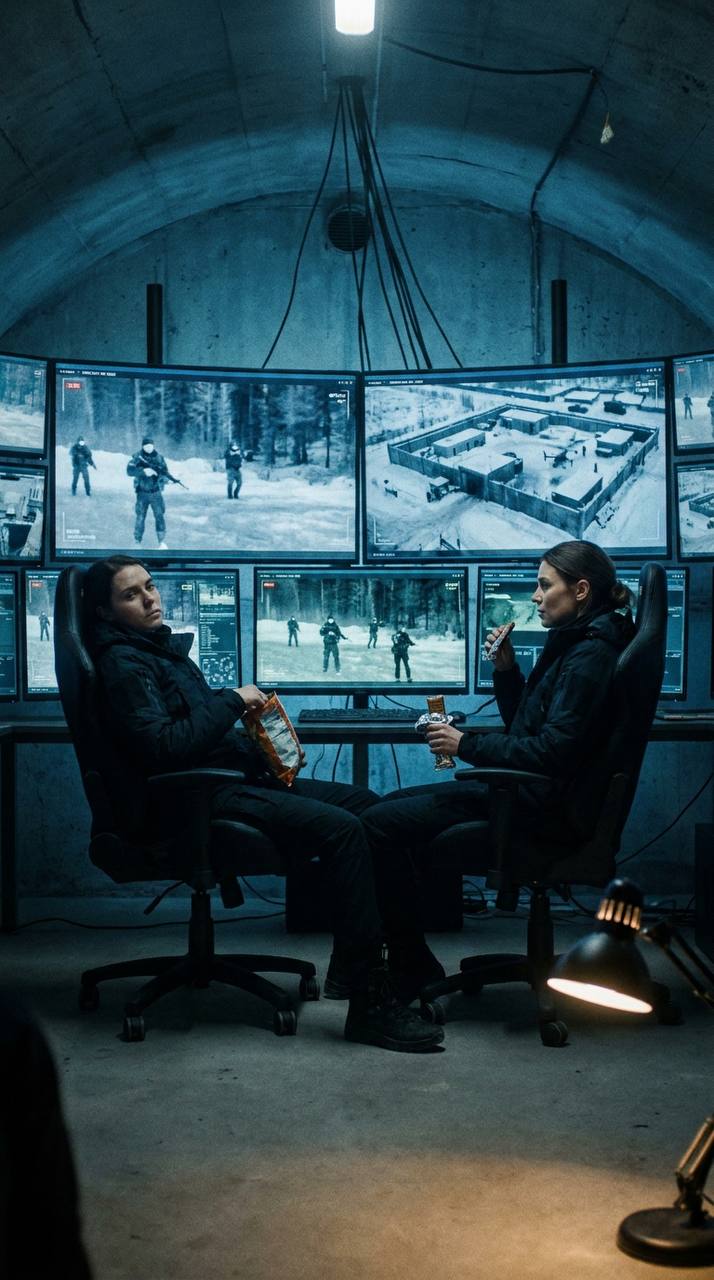
The initial days inside Bunker-Gamma were defined by the rhythmic cycle of the air recyclers and the stark glow of the console screens. Thorne maintained a strict routine: monitoring external sensor feeds, meticulously logging internal environmental parameters, and rationing his emergency supplies. The psychological strain was immense. He was alone, isolated from all known life, with no communication to the outside world. The satellite communicator remained stubbornly silent, unable to penetrate the dense atmospheric interference that now enveloped the region. His only companions were the flickering data points and the ever-present hum of the life support systems.
External sensors, designed for long-term geological study, continued to transmit data that baffled him. Seismic activity remained normal, ruling out a catastrophic volcanic event. Temperature fluctuations became erratic, then stabilized at levels consistent with a complete disruption of the local climate cycle. Most unsettling was the complete absence of any biological signatures. Bird calls, insect chirps, the rustling of leaves—all were gone. The Amazon, a biome teeming with an estimated 10% of the world’s known species, had simply ceased to emit the sounds of life. Thorne meticulously reviewed the data, searching for anomalies, for a pattern, for any clue as to what had transpired. The only consistent observation was the persistent presence of the unknown atmospheric compound, now stable at a level that indicated a profound and permanent alteration of the local environment.
The Unveiling of a Transformed World
After 48 days of complete isolation, Thorne made the decision to attempt an external reconnaissance. His internal air scrubbers had begun to show signs of wear, and the bunker’s emergency power core was nearing its projected lifespan. External atmospheric sensors, for the past week, had indicated a gradual return to breathable oxygen levels, albeit still with a trace of the unknown compound. The risk was calculated. Donning a full environmental suit and helmet, he initiated the hatch depressurization sequence. The heavy steel door groaned open, revealing not the familiar verdant expanse, but a landscape rendered alien. The air, though breathable, carried a faint, metallic scent, unlike anything he had ever encountered. The canopy, once a dense, unbroken sea of green, was now a skeletal lattice of grey-brown branches, stripped bare of leaves. The ground was covered in a fine, ochre dust, thick and pervasive, muffling all sound. The silence was profound, broken only by the faint whir of his suit’s oxygen scrubber.
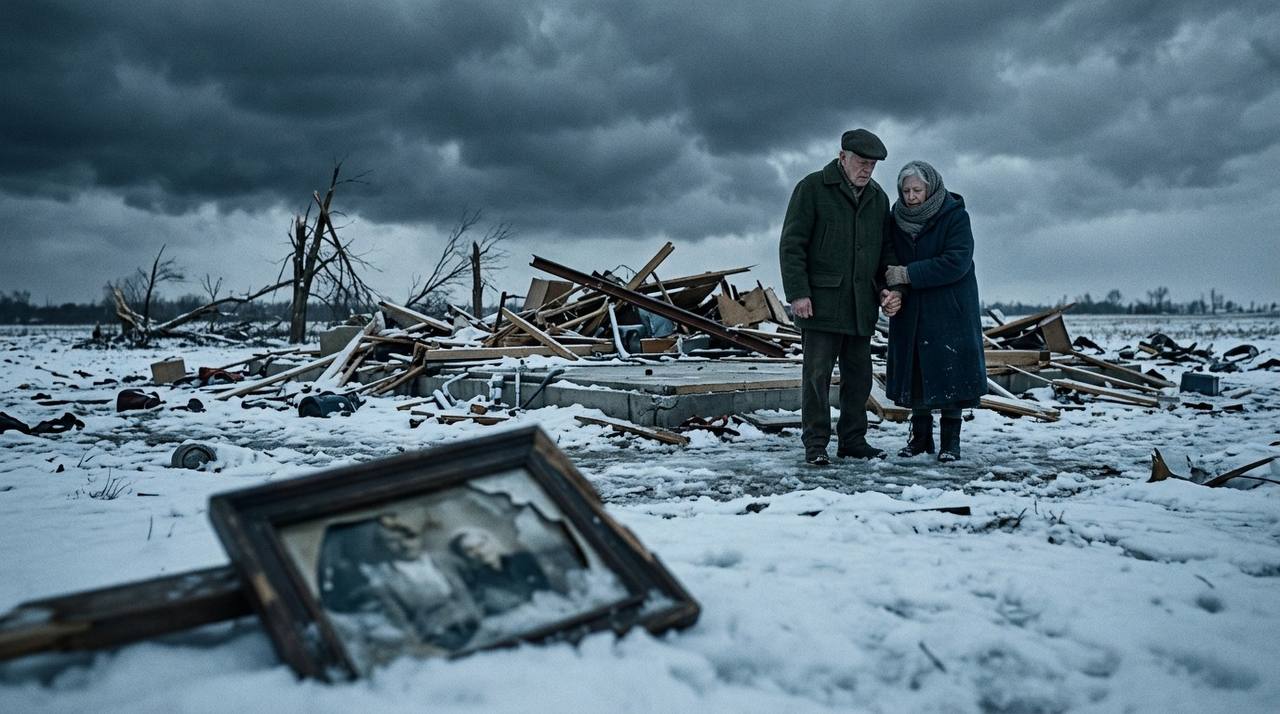
He stepped out onto the dust-covered soil. The light was different, too. Filtered through the altered atmosphere, it cast a sickly, amber glow on the devastated landscape. There were no animal tracks, no insects. The ground where lush vegetation once thrived was now barren, punctuated by the ghostly remains of what had been trees. He walked for several kilometers, guided by the internal GPS of his suit, towards a smaller, secondary research shed a few hours’ trek from Gamma-9. The shed, like the outpost, was intact, but its internal sensors showed no sign of life, no power. There were no bodies, no signs of struggle, only the unsettling emptiness. It was as if life itself had been carefully, meticulously unzipped from the fabric of the environment, leaving only the husk.
Echoes in the Canopy and the Lingering Question
Thorne returned to Bunker-Gamma, the gravity of his discovery settling upon him. The Chronos Event was not merely an atmospheric collapse; it was a fundamental re-composition of the environment. His analysis of the soil and water samples he collected showed microscopic, crystalline structures embedded within the ochre dust, structures that resonated faintly with the unknown compound detected in the air. They were inorganic, yet exhibited a peculiar, almost biological lattice. The jungle, it seemed, had not died, but had been fundamentally re-engineered at a molecular level, its life force replaced by something alien and inert.
The satellite communicator, after weeks of silence, finally crackled to life, picking up a faint, repeating signal from beyond the reconfigured canopy. It was not human. It was a complex, modulated frequency, unlike any known natural or artificial signal. Thorne adjusted his equipment, amplifying the faint hum. It was constant, emanating from a point deep within the heart of the re-engineered Amazon, a source that pulsed with an unidentifiable energy. The choice, he realized, had not been between two forms of death, but between a quick end and a prolonged encounter with an incomprehensible transformation. The silence outside Bunker-Gamma was no longer merely the absence of sound; it was the active hum of a new, unknown order establishing itself in the ruins of the old world.
Notes & sources
- · Story is fictional. Names, locations, and events are invented.
This story is a dramatized retelling. Some details, names, and locations have been changed or invented for narrative purposes.