On the evening of October 12, 2023, Mara Collins, a 34-year-old former park ranger, pushed open the heavy steel hatch of an abandoned missile silo outside Holloway, Nevada. Behind her, the moans of the Afflicted—the infected who had overrun the surface two weeks earlier—grew faint as she descended the ladder into the darkness. The air was cool, 58 degrees Fahrenheit, and smelled of rust and stale diesel. She had been running for six hours, her boots worn thin, her water bottle empty. The silo, decommissioned in 1991, had appeared on a hand-drawn map she’d found in a gas station. It was supposed to be empty.
She was wrong.
The Surface Falls
The Afflicted had emerged without warning in late September. The CDC called it a prion disease; the internet called it the Rapture. Within three weeks, power grids failed, cities fell silent, and the remaining population scattered into the wilderness. Mara had been leading a group of six survivors from Reno toward the supposed safety of the Sierra Nevada mountains. One by one, they fell—to infection, to starvation, to the violence that follows collapse. By October 11, she was alone.
The horde she encountered near Holloway was not large, perhaps thirty individuals, but they moved with the relentless, shambling gait that made evasion nearly impossible. Mara had climbed an old water tower and watched them pass below. Their eyes were milky, their mouths open in silent cries. She waited until they were a quarter mile east before descending. The silo was half a mile north, its entrance partially hidden by sagebrush.
Into the Silo
The ladder was seventy feet long, bolted to the concrete shaft. Mara’s flashlight revealed a circular chamber at the bottom, about forty feet in diameter, with four corridors branching off. The walls were covered in peeling white paint and old warning decals. A single bulb flickered overhead, powered by a generator she could hear humming somewhere deeper. The door at the bottom of the ladder had been unlocked—a detail that should have warned her.
She checked each corridor quickly. The first led to a decommissioned control room, empty save for overturned chairs and a shattered computer monitor. The second opened into a dormitory with eight metal bunks, all stripped of mattresses. The third corridor ended in a heavy blast door, sealed shut. The fourth corridor sloped downward, and from it came a faint orange glow and the sound of voices chanting in low, rhythmic tones.
Mara froze. The chanting was not the broken speech of the Afflicted. It was deliberate, melodic, human. She switched off her flashlight and crept forward.
The corridor opened into a large cavern, likely a former storage area, now converted into a makeshift sanctuary. Candles lined the walls. In the center, a group of about twenty people knelt in a circle, their heads bowed. At the head of the circle stood a man in a long black coat, his hands raised. He spoke in a clear, commanding voice: “The surface is a wound. The bunker is the womb. We are the rebirth.”
Mara recognized the name from whispers she had heard in the early days of the collapse: Elias Voss, founder of The Order of the Last Light. He had been a philosophy professor at UNLV before the outbreak, known for his apocalyptic sermons online. He had vanished at the first sign of chaos, taking his followers underground.
The Order Below
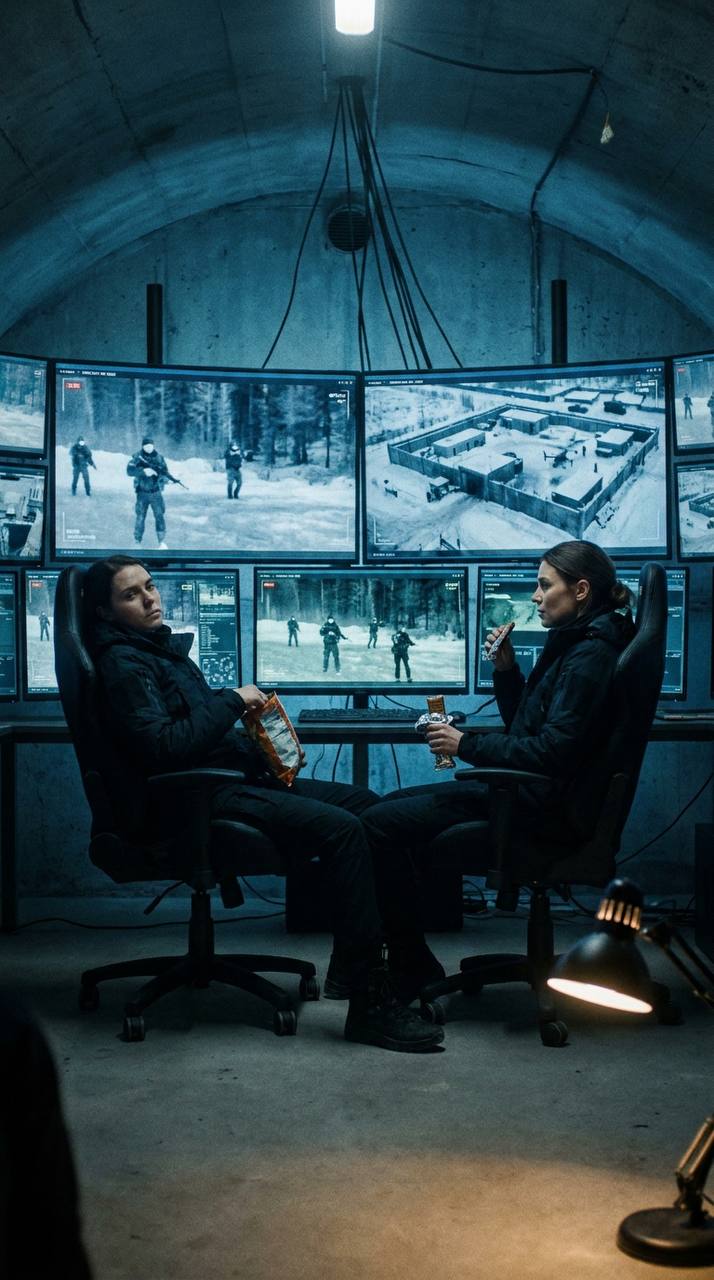
For the next eighteen hours, Mara hid in the unused control room, listening through the vents. She learned that the Order had been in the silo for nearly a month. They had stockpiled food, water, and medical supplies. They believed the Afflicted were a divine cleansing, and that only those who submitted to Voss’s teachings would survive. New arrivals were brought before the congregation, given a choice: join or be cast out. “Cast out” meant being locked outside the blast door, which led to a tunnel that surfaced near the highway—where the Afflicted roamed.
Mara knew she could not pretend to join. She had no faith in gods or cults. Her only chance was the blast door. But it required a keycard, and Voss wore it on a chain around his neck.
She watched the daily routine. At 6:00 a.m., the generator was refueled from a tank in the garage. The garage was located at the far end of the dormitory corridor, accessible through a separate door that was always locked. But during refueling, a follower named Derek would unlock it briefly. Mara saw her opportunity.
On the morning of October 13, she slipped into the dormitory while the congregation was chanting in the main cavern. The garage door was unlocked, Derek inside with a fuel can. She waited until he left, then slipped through the door before it closed.
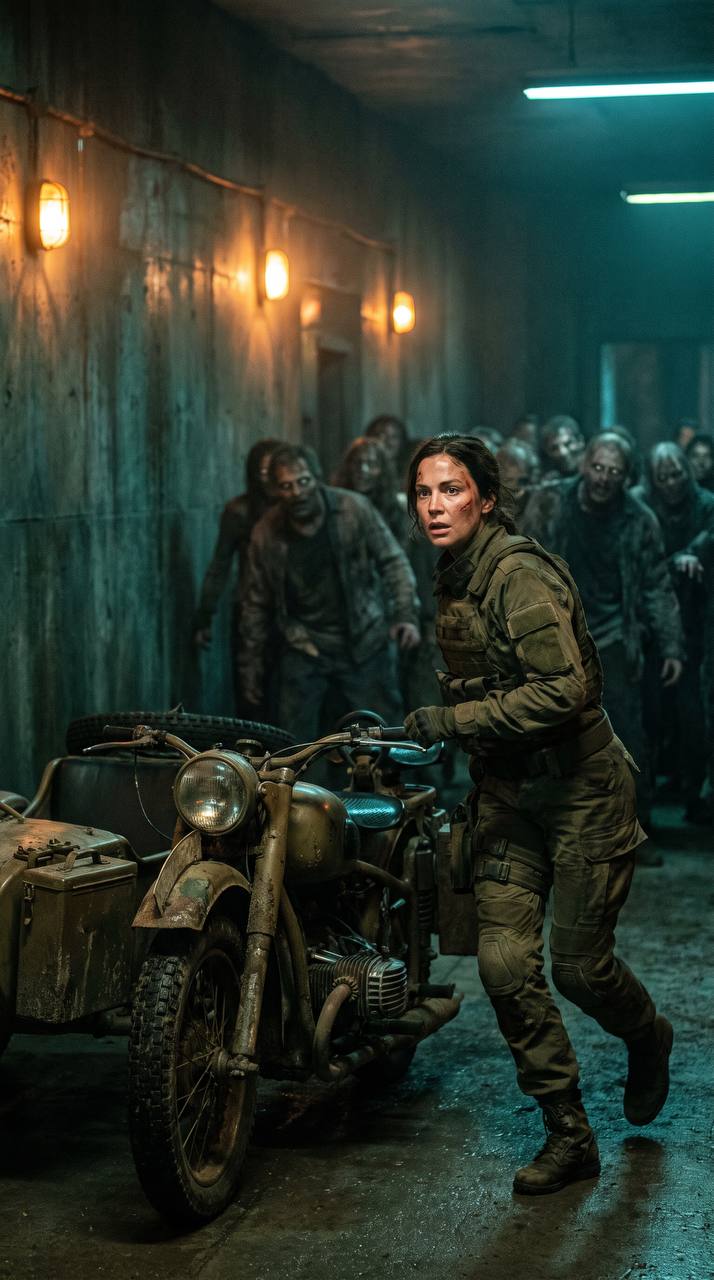
The garage was a long, narrow room with a high ceiling. Against the far wall stood a single vehicle: a 1972 Triumph Bonneville, its chrome dulled but intact. The tires were full. The key was in the ignition. A note taped to the seat read, “For emergencies only. Fuel in the red can.”
The Garage
Mara had ridden motorcycles since she was sixteen. She knew the Bonneville was a classic—parallel twin engine, 650cc, kick-start. It would be loud, but that was the point. The garage had a secondary exit: a reinforced door that led to a service tunnel, which according to the silo’s schematics (she had studied them in the control room) opened onto a dry riverbed a mile south.
The door was secured with a padlock. Mara found a crowbar in a tool chest and pried it open. The tunnel beyond was dark, but she could see a sliver of daylight at the far end. She rolled the motorcycle through the door, then stopped. She needed to disable the main blast door keycard system so the Order couldn’t follow her. But that would also trap them. She decided she didn’t care.
She returned to the control room and pulled the main circuit breaker. The lights went out. The generator sputtered. From the main cavern, she heard shouts. She ran back to the garage, kick-started the Bonneville on the second try, and roared down the tunnel.
The Triumph’s engine echoed off the concrete walls. Behind her, she heard the blast door begin to close—a slow hydraulic hiss. The tunnel was about half a mile long, sloping upward. She hit the daylight at full throttle, the motorcycle leaping over the rubble of the collapsed entrance. The sky was gray, the air cold. She did not look back.
Aftermath
Mara rode for three days, following back roads and dry creek beds, until she reached a small town called Pioche, where a group of survivors had established a walled compound. She told them her story. Some believed her; others thought the isolation had broken her mind. She did not return to the silo.
In the weeks that followed, a search party was organized to investigate the Holloway site. They found the entrance sealed, the tunnel collapsed. No sign of the Order or the Afflicted. The official report listed the bunker as a possible mass grave, but no excavation was attempted due to lack of resources.
Mara still dreams of the chanting. She has never learned what happened to the people she left behind. The Bonneville sits in a garage in Pioche, its tank empty, its key on a hook by the door. She says she might ride it again someday. She hasn’t yet.
Notes & sources
- · Story is fictional. Names, locations, and events are invented.
This story is a dramatized retelling. Some details, names, and locations have been changed or invented for narrative purposes.