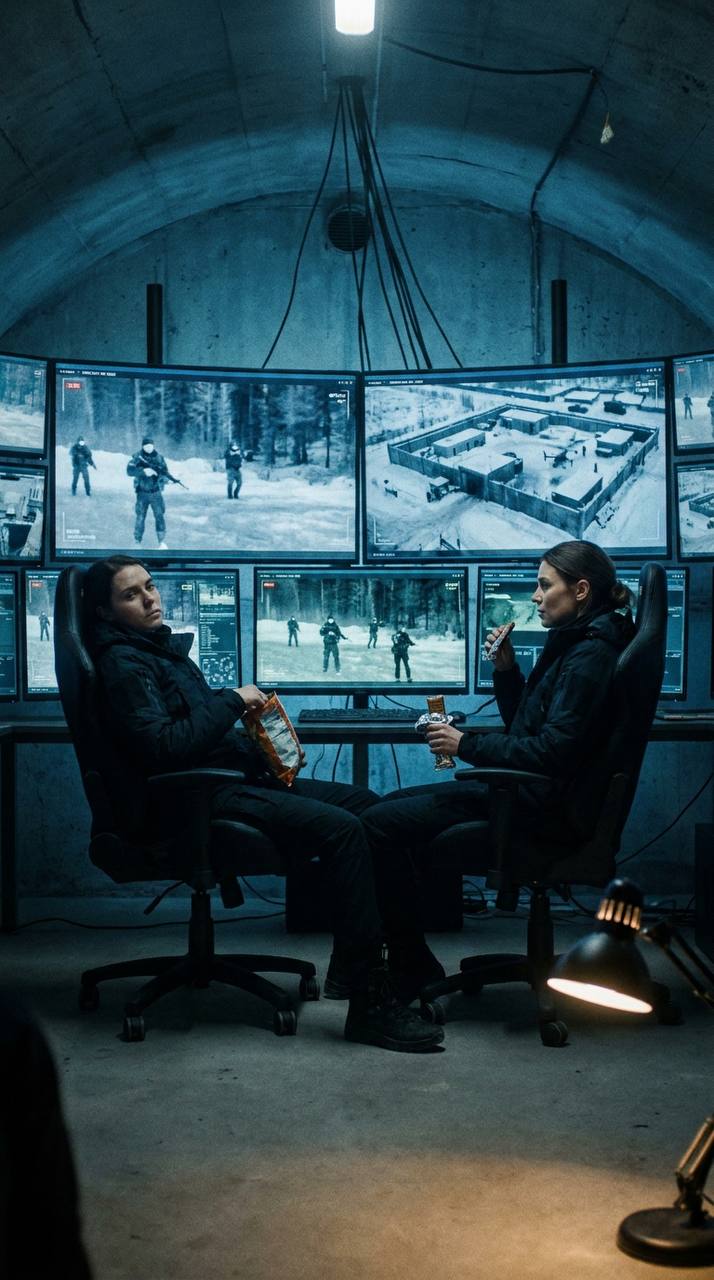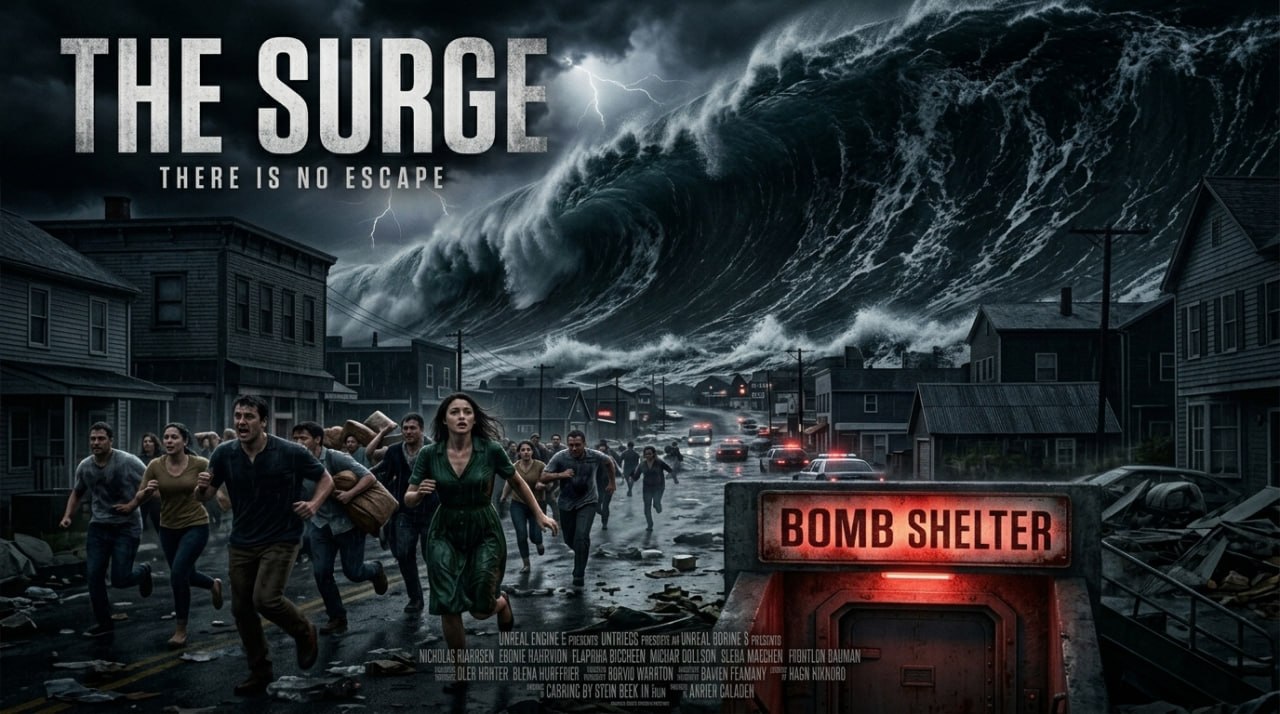
On October 27, 2043, at precisely 14:17 PST, the seismic alert sirens wailed across the Aegis Deepwater Observatory in Port Serenity, California. Within minutes, two individuals, Elias Vance, a systems engineer, and Dr. Aris Thorne, lead researcher, were sealed within the facility’s subterranean bunker, designed to withstand Category 5 seismic events and their subsequent tsunamis. Their last view of the surface, projected onto the bunker’s main monitor, showed the Pacific Ocean receding unnaturally far from the coastline, a prelude to a catastrophic wave. The reinforced steel hatch clamped shut with a hydraulic hiss, severing their direct connection to the world above. The silence that followed was profound, broken only by the hum of life support and the distant, growing roar.
The Descent into Aegis
The Aegis bunker, a marvel of civil engineering, lay seventy feet beneath the bedrock of the Port Serenity cliffs. Its walls, four feet of high-density concrete reinforced with titanium alloy, were designed to create an impervious shell against both geological and hydrological forces. Inside, the main chamber comprised a compact control room, two sleeping berths, a small galley, and a utility core housing air filtration, water recycling, and power generation systems. For Elias Vance, 34, the bunker represented a triumph of his design contributions; for Dr. Aris Thorne, 58, it was the ultimate insurance policy for his invaluable deep-sea research data, stored on redundant, shielded servers. Their initial descent was orderly, a practiced drill. Vance monitored the external sensors, his fingers dancing across a holographic display. Thorne sat silently, watching the main screen, which depicted the ocean’s behavior with unsettling clarity. At 14:31, the screen showed the first visible swell on the horizon, a dark line that rapidly grew into a wall of water. The seismic tremors had ceased, replaced by a new, more immediate threat. The sound, initially a low rumble transmitted through the earth, escalated into a thunderous impact that vibrated through the very bedrock, rattling the instruments on their consoles. The emergency lights flickered but held.
Loss of Light
The initial impact was a single, immense shockwave, a physical compression felt deep within the bunker. It was followed by a series of grinding, tearing sounds, as if the very earth above was being scoured. On the main monitor, which displayed a feed from a reinforced camera array overlooking the cliff face, the world dissolved into a maelstrom of white foam and churning debris. For several long minutes, the image was obscured, a chaotic blur of water, rock, and splintered timber from the observatory’s pier. Then, as the initial surge began to recede, a new image coalesced: a vast, turbulent expanse of water where the coastline had been. The camera, miraculously, still functioned, showing only the endless, roiling ocean, now extending far inland. There was no visible land, no structure, nothing but the gray, tempestuous sea under a bruised sky. Vance and Thorne watched in silence, their faces illuminated by the eerie blue glow of the screen. Then, without warning, the main monitor flickered once, briefly displaying a cascade of static, and then went dark. The ancillary screens, showing internal systems and environmental data, followed suit in quick succession. The bunker was plunged into a sudden, deeper gloom, illuminated only by the faint, persistent glow of the emergency panel lights. The connection to the surface, the last visual tether, had been severed.
A Subterranean World
With the external monitors dead, the reality of their situation became stark. The immediate task was assessment. Vance moved methodically, checking power conduits, data lines, and the integrity of the external sensor arrays, but all external communication systems were non-responsive. The primary power grid, designed to draw from the surface facility, was offline. They were running on internal battery reserves, finite and precious. Dr. Thorne, meanwhile, focused on the environmental controls. Air pressure remained stable, though the air recycling unit emitted a subtle, metallic tang. Water levels in the internal cisterns were normal. However, a faint, metallic groan resonated from the deeper structural elements of the bunker. It was intermittent, suggesting a new form of stress on the reinforced shell. The water intrusion alarms, designed to detect even microscopic breaches, remained silent, but the sound was unsettling. Thorne noted it in his log, his expression unreadable. The silence that followed the loss of the screens was oppressive, amplifying every hum of the machinery, every creak of the structure. They were now truly alone, suspended in a concrete void, the vastness of the ocean pressing down above them. The immediate adrenaline had begun to wane, replaced by a colder, more enduring sense of isolation. They knew the tsunami had been colossal, but the extent of the devastation, and their own chances of rescue, remained an unanswerable question. The emergency rations and water supplies were finite, calculated for a two-week isolation period. Beyond that, the protocols became vague.
The Waiting Game
Days blurred into a monotonous cycle of silence and routine. Elias Vance dedicated himself to attempting to restore any form of external communication, cycling through various frequencies and protocols, but the airwaves remained a wall of static. He meticulously logged power consumption, optimizing every system to conserve their dwindling reserves. The auxiliary lights were dimmed, and non-essential diagnostics were shut down. Dr. Thorne, despite the grim circumstances, maintained his scientific discipline. He recorded atmospheric pressure fluctuations, analyzed the recycled air for anomalies, and continued to log the intermittent structural groans, which had become slightly more frequent. He also began a detailed inventory of their rations, calculating a stretched survival period beyond the initial two weeks. The psychological toll began to manifest in subtle ways. Vance became more withdrawn, his movements precise, almost robotic. Thorne, usually loquacious, spoke only when necessary, his gaze often distant, fixed on the unlit main monitor. The bunker, once a symbol of security, became a tomb. The sound of water, a constant, low thrum, began to permeate their perception, a reminder of the immense weight above. They ate their nutrient paste and drank their recycled water in silence, the unspoken question of the surface hanging between them.
Whispers from the Deep
By the end of the second week, the air quality had perceptibly degraded, despite the filtration systems. A faint, earthy smell, reminiscent of damp soil and minerals, began to pervade the bunker. The structural groans had also evolved; they were no longer isolated events but a continuous, low-frequency resonance that vibrated through the floor plates. Vance hypothesized it was either the slow settling of displaced earth and rock or, more ominously, the gradual ingress of water under immense pressure, forcing its way through microscopic fissures in the concrete. He had begun to ration his attempts at communication, performing only brief, scheduled bursts, hoping to intercept a stray signal. Dr. Thorne spent hours reviewing old schematics of the bunker, tracing hydrological pathways and structural stress points. He spoke less and less, his focus becoming almost entirely internal. The initial hope of rapid rescue had faded, replaced by a grim acceptance of their predicament. They were not merely waiting for rescue; they were waiting for information, for any sign that a world still existed to rescue them. The thought of surfacing into an unknown, possibly uninhabitable landscape, was a new, abstract terror. The silence outside their immediate, artificially sustained environment was absolute. No distant engine, no radio chatter, no human voice.
On the twenty-first day, the main power system issued a critical alert: battery life estimated at 72 hours. Vance and Thorne sat across from each other, the last operational display showing the dwindling power bar. The emergency lights cast long, stark shadows across the control room. The low thrum of the ocean above, transmitted through seventy feet of concrete and rock, was now the loudest sound in their world. The water pressure continued its subtle, unyielding work against their refuge. What awaited them, either in the slow demise of the bunker’s systems or in the potentially altered world above, remained an unanswered question, suspended in the silent, crushing weight of the Pacific.
Notes & sources
- · Story is fictional. Names, locations, and events are invented.
This story is a dramatized retelling. Some details, names, and locations have been changed or invented for narrative purposes.