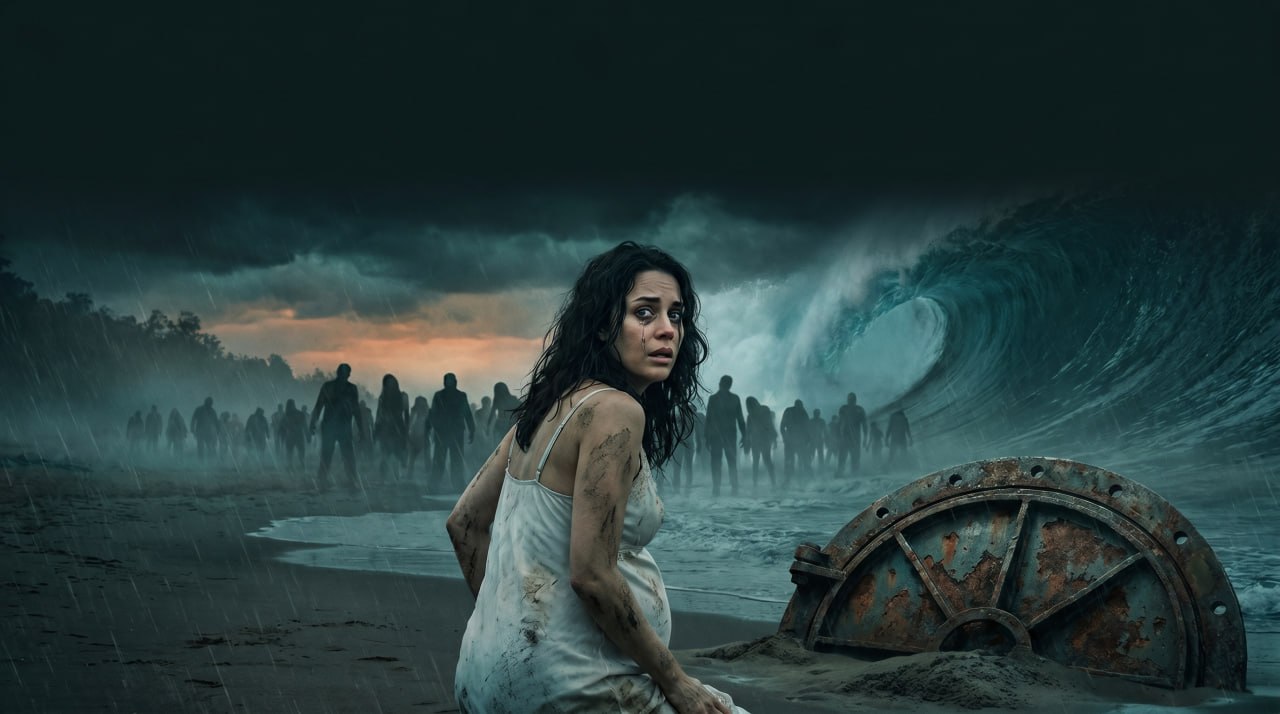
On April 17, 2008, at approximately 4:38 PM CDT, an F4 tornado, part of a wider supercell system, descended upon the small farming community of Havenwood, Ohio. Among those seeking shelter were Eleanor Vance, 42, her husband Thomas Vance, 45, and their daughter Lily Vance, 11, along with three neighbors: Arthur Henderson, 71, a retired postal worker; Dr. Aris Thorne, 58, the town’s general practitioner; and young Michael Croft, 16, a student who had been helping the Vances with yard work. They congregated in the Vances’ reinforced, subterranean storm cellar, a structure built into a rise in their property, designed to withstand the region’s unpredictable weather. It was the last confirmed location of all six individuals.
The Descent into Darkness
The air pressure shift was the first tangible sign, a sudden oppressive weight followed by a deep, resonant rumble that vibrated through the concrete walls. Thomas Vance, a man accustomed to the stoicism of rural life, later described to investigators, via a pre-recorded emergency message found on a handheld radio, the sound as akin to “a freight train tearing through a metal shed.” The cellar’s single steel door, secured by multiple heavy-duty bolts, began to groan under the unseen assault. Lily Vance, huddled between her parents, recounted the experience with a child’s stark clarity: “It felt like the whole world was shaking apart, and then it just… stopped.” The ‘stop’ was not an end but a transition. The cacophony of the tornado’s passage, the splintering wood and shattering glass from above, ceased abruptly. What replaced it was an absolute, profound silence, deeper and more unsettling than the preceding chaos. Then, darkness.
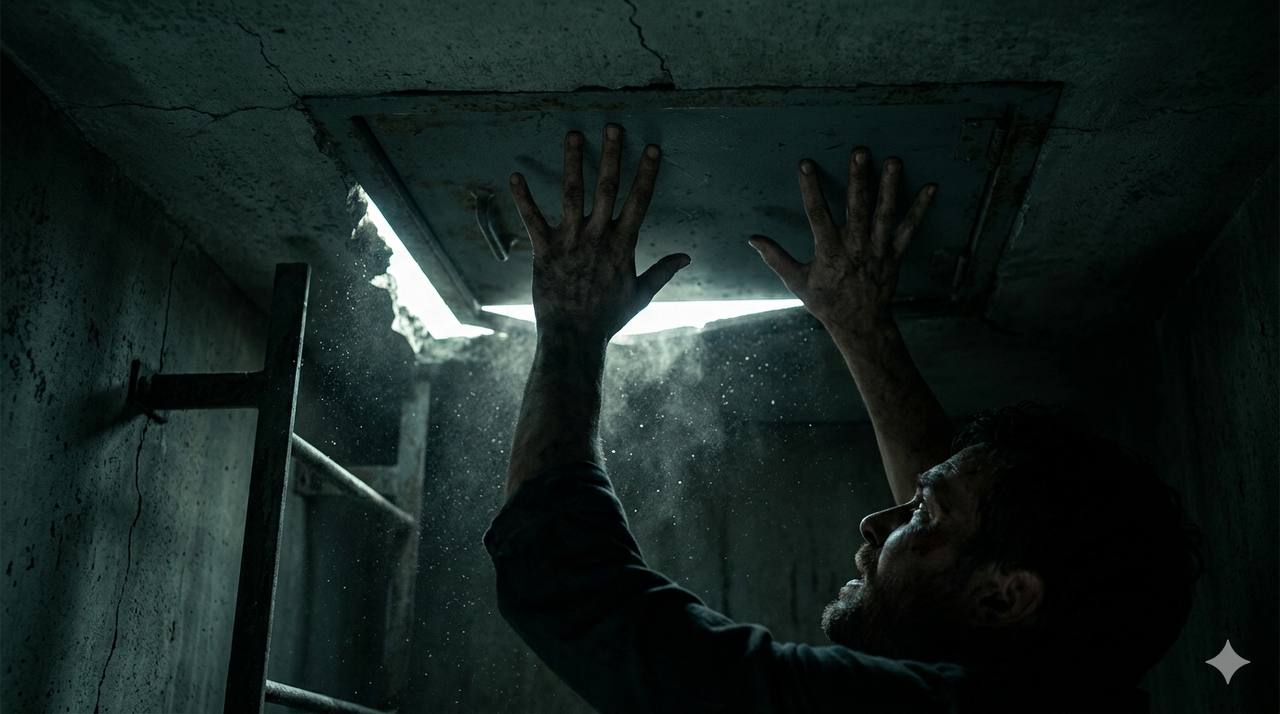
The cellar’s single battery-powered lantern, which had provided a feeble glow, flickered once and died. The backup flashlight, clutched in Arthur Henderson’s trembling hand, refused to ignite. The Vances had prided themselves on their preparedness, but the sheer force of the storm had severed the external power conduits to the lantern, and the backup had apparently been damaged by the intense vibrations. In the ensuing black, the six occupants began a new kind of struggle. The air grew thick with dust and the acrid smell of ozone and damp earth. Thomas Vance attempted to unbolt the heavy door, but it was jammed solid. He pushed, heaved, and then pounded, his efforts met only by the unresponsive steel and the unsettling silence beyond it. It became clear, even in the immediate aftermath, that the path out was no longer visible, nor likely traversable.
A Labyrinth of Debris
Initial attempts at communication proved futile. The Vances’ emergency radio, designed for local transmission, crackled with static. Dr. Thorne, ever the pragmatist, took charge of assessing the cellar’s structural integrity. Its reinforced concrete walls and ceiling appeared intact, a testament to Thomas Vance’s meticulous construction. However, the entrance shaft, a short, narrow passage leading up to ground level, was entirely compromised. Thomas, using a small, retrieved utility light, managed to illuminate a section of the shaft. What he saw was a solid wall of earth, splintered timber, and twisted metal, packed densely. The tornado had not merely damaged the entrance; it had collapsed the entire area surrounding it, effectively burying the cellar under tons of displaced material.
Their initial supply check revealed ample water, stored in large plastic containers, and a reasonable amount of non-perishable food items – canned goods, energy bars, dried fruit. These provisions, intended for a few days, would now need to stretch indefinitely. The air quality, while initially dusty, seemed stable, circulating faintly through unseen cracks, suggesting some connection, however tenuous, to the outside. The psychological toll, however, began almost immediately. Michael Croft, a normally boisterous teenager, retreated into a corner, his breathing shallow. Lily Vance, despite her earlier composure, clung to her mother, her small face pressed against Eleanor’s side. Arthur Henderson, whose age made him particularly vulnerable, began to whisper prayers, his voice a frail counterpoint to the oppressive quiet. Dr. Thorne, maintaining a professional demeanor, rationed the water and food, ensuring each person received a calculated portion, an act that instilled a fragile sense of order in their subterranean prison.
Days Without Light
Time became an abstraction. Without windows or external sounds, the group relied on Thomas Vance’s wristwatch for a semblance of a schedule. Days blurred into a continuous cycle of hushed conversation, the slow consumption of meager meals, and the persistent, gnawing awareness of their predicament. They attempted to clear the entrance shaft again, using a shovel and a crowbar stored in the cellar. The work was slow, arduous, and ultimately fruitless. For every shovelful of earth they managed to dislodge, more seemed to settle from above, a constant reminder of the immense weight pressing down on them. The air grew stale, heavy with the scent of damp soil and human presence. Thomas discovered a small fissure in the far wall, barely wide enough to insert a hand, from which a trickle of muddy water emerged. It was a sign of the outside, but also a stark indicator of how deeply they were entombed.
Eleanor Vance tried to maintain morale, leading quiet songs or recounting stories from their lives above ground. Lily, in turn, drew pictures on stray pieces of paper, depicting green fields and blue skies, a stark contrast to their current reality. Dr. Thorne meticulously monitored everyone’s health, noting the gradual onset of fatigue, the diminishing clarity of thought, and the pervasive pallor of skin in the absence of sunlight. Arthur Henderson’s tremors increased, his whispers turning more frantic. Michael Croft remained largely silent, his eyes wide and unfocused in the dim light of the single remaining utility lamp, which they conserved for short, necessary intervals. Hope, once a flickering ember, began to dim with each passing, unvaried ‘day’. Their pre-recorded radio message, intended for emergency services, was broadcast repeatedly, but no response ever came.
The Whispers of Hope and Despair
By what they estimated was the fifth or sixth day, the dynamics shifted. Small irritations became magnified. A dropped utensil, a misplaced bottle of water, could trigger a sharp word, quickly regretted. Dr. Thorne, recognizing the psychological toll, initiated a routine of short, guided meditation, though few found true solace in it. Thomas Vance, driven by a desperate need for progress, began to explore the cellar’s perimeter, tapping the walls, listening for any hollow sounds that might indicate a weakness, a path. He found nothing but solid concrete and the pervasive, damp earth.
One ‘morning’, a faint, rhythmic thumping sound permeated the stillness. It was distant, muffled, but distinct enough to electrify the group. Thomas and Dr. Thorne pressed their ears to the wall, convinced it was the sound of rescuers. Lily even called out, her voice raw. The thumping continued for several minutes, a beacon in their dark world, before fading into nothing. The subsequent silence felt heavier, more crushing than before. It was later speculated by external investigators, long after the fact, that the sound might have been residual ground settling, or perhaps even a distant piece of heavy machinery, entirely unrelated to their plight. But in that moment, for the six trapped individuals, it was a cruel illusion of hope, followed by an even deeper plunge into despair. The trickling water from the fissure increased slightly, now a steady drip, drip, drip, echoing in the confined space.
The Unseen Horizon
As the estimated second week drew to a close, resources dwindled to critical levels. The last of the food was consumed, and water was rationed to mere sips. The utility lamp had long since ceased to function, leaving them in absolute, unyielding darkness, broken only by the occasional flash from Thomas’s dwindling cell phone battery, used sparingly to check the time, a practice that eventually ceased when the phone died entirely. The air, though still breathable, carried a faint, earthy odor of decay, perhaps from unseen organic matter above them. Conversations became sparse, punctuated by long periods of quiet, each person retreating into their own internal struggle against the encroaching despair.
The final entries on the emergency radio’s recording, recovered months later, captured fragmented whispers. Eleanor Vance’s voice, weak but clear, repeating Lily’s name. Thomas Vance, offering instructions to an unknown listener, his words trailing off into static. Arthur Henderson’s prayers were no longer audible. Michael Croft’s presence was only inferred by the sound of his breathing, heavy and labored. Dr. Thorne, ever practical, was heard discussing the diminishing oxygen levels, his voice clinical, devoid of emotion. The Havenwood tornado was eventually classified as an F4, leaving a mile-wide swath of destruction. Rescue efforts in the area lasted for weeks. Search teams, using ground-penetrating radar, located the general vicinity of the Vance cellar, but the sheer volume of compacted earth and debris made excavation impossible without specialized heavy equipment, which was deployed to other, more accessible sites. When they returned months later, the ground had shifted further, and the exact location of the entrance, and the cellar itself, remained elusive, swallowed by the scarred landscape. The six individuals from Havenwood simply ceased to exist above ground, leaving behind only questions, and the chilling, silent testament of an earth that had claimed them whole.
Notes & sources
- · Story is fictional. Names, locations, and events are invented.
This story is a dramatized retelling. Some details, names, and locations have been changed or invented for narrative purposes.