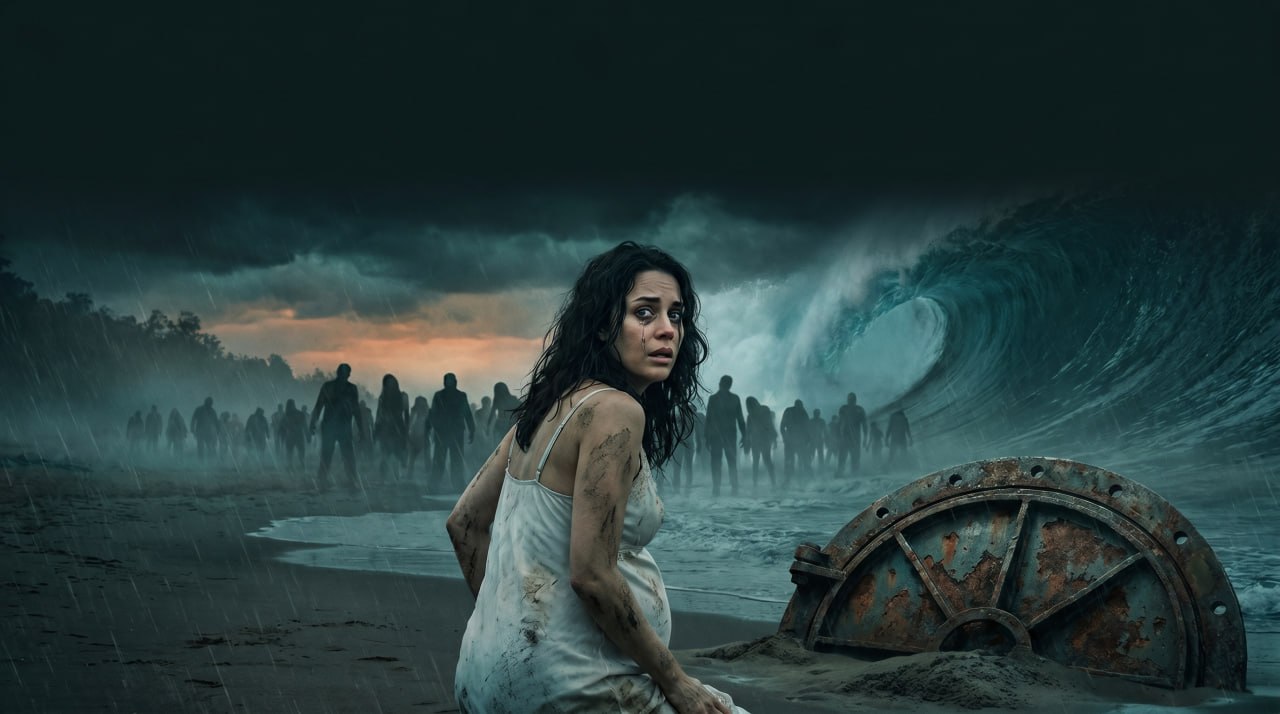
On August 14, 2007, Elara Vance, age twenty-two, disappeared from Emberlark Point, a remote and self-sufficient settlement nestled on a rugged stretch of the Mendocino County coastline. A storm had raged through the night, a common occurrence in that unforgiving region. When Elara was discovered missing from her modest cabin the following morning, the Brethren of Emberlark, as the community called themselves, quickly concluded she had been swept into the churning Pacific. Her absence was attributed to the unpredictable nature of the sea, a force both revered and feared by the Brethren. No body was ever recovered, a detail that, for some, solidified the narrative of a watery grave. For others, it opened a quiet, unsettling question: What if the ocean was not her end, but her beginning?
The Brethren of Emberlark
Emberlark Point was not a town in the conventional sense. It was a collection of sturdy, hand-built homes and communal structures, isolated from the nearest paved road by fifteen miles of winding, unpaved track. Founded in the early 1950s by a group seeking to live off the land and sea, free from the perceived corruptions of modern society, the Brethren had cultivated a life of rigorous self-reliance and strict adherence to their founding principles. Leadership was vested in a council of elders, with Elder Silas Thorne serving as its stern, unyielding voice for the past two decades. The community’s ideology emphasized communal good over individual ambition, labor over leisure, and a profound respect for the natural world, particularly the ocean, which provided their sustenance and shaped their worldview. Outsiders were viewed with suspicion, their ways seen as a threat to the Brethren’s carefully constructed order. Children grew up learning the rhythms of fishing, farming, and communal living, with limited exposure to the world beyond their cove. Formal education was basic, focused on practical skills and the Brethren’s own scriptures, which blended environmentalism with a unique strain of asceticism. Elara Vance had known no other life. Born to one of the founding families, she was expected to follow the established path: marry within the community, raise children, and contribute to the collective. But Elara possessed a quiet intensity, a curiosity that occasionally drew the disapproving gaze of Elder Thorne.
A Quiet Rebellion
Elara’s internal rebellion began subtly, with stolen moments. She would spend hours by the tide pools, not just gathering shellfish, but observing the intricate ecosystems, sketching the patterns of the waves, or watching distant ships pass on the horizon. These solitary acts were frowned upon; communal activity was preferred. Her discontent deepened with the arrival of a transient marine biologist, Dr. Alistair Finch, who spent a summer studying the unique algal blooms near Emberlark in 2006. Dr. Finch, an academic from the University of California, Santa Cruz, represented everything the Brethren distrusted: external knowledge, individualistic pursuit, and a connection to the ‘outside world.’ Yet, Elara found ways to speak with him, ostensibly about local marine life, but secretly about life beyond Emberlark. He spoke of cities, universities, and personal choice—concepts foreign and thrilling to her. He lent her a few tattered books: a collection of sea narratives, an atlas, and a rudimentary guide to celestial navigation. These texts became her most prized possessions, hidden beneath a loose floorboard in her cabin. She learned the constellations, traced imagined journeys across vast oceans, and absorbed the stories of those who had dared to venture beyond the familiar. The ocean, once a source of communal bounty and spiritual awe, transformed into a symbol of boundless possibility, a potential escape route from the life she increasingly found suffocating.
The Plan Takes Shape
Elara understood the profound difficulty of leaving Emberlark Point. The Brethren maintained a watchful eye on all their members. Defection was unheard of, and attempts to leave were met with communal pressure, shunning, or, in extreme cases, forced return. Physical barriers also played a role: the isolated track was monitored, and the nearest town was a full day’s journey on foot. The only viable path, Elara concluded, was by sea. Over months, she began to implement a meticulous, clandestine plan. She had always been adept with her hands, a skill she now applied to repairing and provisioning an old, rarely used fishing skiff owned by her family, which sat neglected on a small, secluded stretch of beach a mile north of the main cove. Under the guise of mending nets or gathering driftwood, she would work on the boat, patching small leaks, reinforcing seams, and cleaning its small outboard motor. She secretly stockpiled non-perishable food, fresh water, warm blankets, and the few navigation tools she had gleaned from Dr. Finch’s books and a discarded compass she found near the old lighthouse ruins. The most critical element was timing. She needed a night when the community’s watch would be lax, when the sea would be rough enough to deter any immediate pursuit but not so violent as to capsize her small vessel. She also needed complete darkness, a moonless sky, to make her departure unseen.
Into the Swell
The night of August 14, 2007, brought the perfect, terrible confluence of conditions. A fierce squall, unpredicted by the Brethren’s usual weather lore, swept in from the west. Rain lashed down, and winds howled through the cypress trees, rattling the windowpanes of every cabin. The storm provided cover. At approximately 2:00 AM, under the cloak of torrential rain and gale-force winds, Elara slipped from her cabin. She moved with practiced stealth through the mud and driving rain towards the secluded beach where the skiff awaited. The sea was a roaring, churning chaos, but Elara, guided by a strange calm, knew this was her only chance. She launched the small boat into the heaving waves, the outboard motor sputtering to life after several tense attempts. Fighting the powerful currents and the immense swells, she steered the skiff westward, away from the familiar, confining coastline, towards the vast, indifferent expanse of the Pacific. The Brethren, upon discovering her absence at dawn, launched an immediate search. Elder Thorne organized every able-bodied member, scanning the treacherous cliffs and beaches. Sheriff Brody Finch, from the county seat of Port Harbor, was eventually contacted, his arrival delayed by the storm-damaged roads. Sheriff Finch’s deputies conducted a perfunctory search, hampered by the Brethren’s insular nature and their reluctance to cooperate fully with outside authorities. They found no sign of Elara. A week later, a weathered, blue scarf—identified by Elara’s mother as belonging to her daughter—was discovered tangled in kelp on a beach twenty miles south of Emberlark Point. It was the only trace. The official conclusion was accidental drowning, a tragic casualty of the unpredictable ocean.
The Fading Trail
The local law enforcement investigation was short-lived. Sheriff Finch noted the unusual lack of distress from the community, aside from Elara’s immediate family. Elder Thorne maintained that the sea had claimed her, a spiritual cleansing or a natural tragedy. Without a body, without any other leads, and with the Brethren offering minimal assistance, the case quickly went cold. There were no witnesses to Elara’s departure, no evidence of foul play, and no indication that she had planned to leave. The recovered scarf, while confirming her presence near the water, offered no definitive proof of her fate. Was it washed ashore after she drowned, or did it deliberately detach during her escape, a final, ambiguous signal? The questions lingered, particularly for Sheriff Finch, who found the Brethren’s collective certainty about her drowning unsettling. He had seen enough missing persons cases to know that the absence of a body rarely meant a definitive conclusion. He suspected, though he could never prove, that Elara Vance might have been more than a victim of the sea. She might have been a refugee.
Elara Vance became a legend in Emberlark Point, a cautionary tale for those who might question the Brethren’s ways, a symbol of the ocean’s power. Yet, for a few, particularly the young people who heard whispers of the outside world, she became something else: a quiet inspiration, a phantom of defiance. The official record states Elara Vance drowned on August 14, 2007, her body lost to the Pacific. No one has ever come forward claiming to be Elara Vance, nor has any trace of her, or the small fishing skiff, ever been definitively found. The vast, indifferent ocean holds its secrets, leaving the fate of Elara Vance suspended between tragedy and a daring, unconfirmed freedom.
Notes & sources
- · Story is fictional. Names, locations, and events are invented.
This story is a dramatized retelling. Some details, names, and locations have been changed or invented for narrative purposes.