On October 17, 1998, the small, isolated community of Oakhaven, nestled deep within the Blackwood Range, braced for a severe weather event. Elias Miller, a third-generation Oakhaven resident, watched from his porch as the sky above their valley shifted to an unnatural shade of bruised purple. His wife, Clara, was already gathering their daughter Lily’s emergency kit, a routine perfected over years of living in an area prone to harsh storms. This time, however, the atmospheric pressure felt different, a profound stillness preceding a promised cataclysm. The community bunker, a relic from the Cold War era, stood ready, its reinforced concrete walls a familiar promise of safety against nature’s fury. Twelve souls from Oakhaven prepared to seek refuge there, but not all of them would emerge.
The Gathering Storm
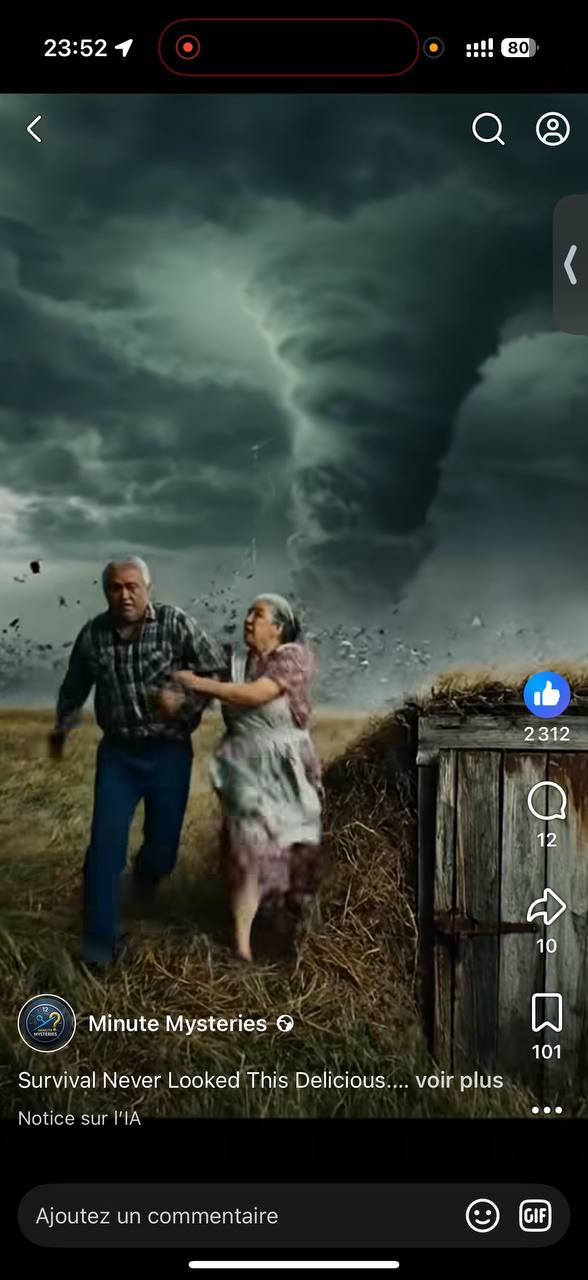
The alert had come through on the crackling community radio earlier that afternoon. Sheriff Beaumont, broadcasting from Fairview, the nearest town some two hours away, described a rapidly intensifying supercell forming over the Blackwood peaks, moving directly towards Oakhaven. It was not merely a warning; it was an order to seek immediate shelter. Elias had already secured their livestock and boarded their windows. At 5:47 PM, as the first torrential rains began to lash the valley, the Miller family—Elias, Clara, and six-year-old Lily—began their hurried walk towards the bunker, a five-minute trek from their farmhouse. They were not alone on the muddy path. Thomas and Sarah Jensen, with their teenage son Daniel, walked ahead, their faces grim. Behind them, old Mr. Henderson, a reclusive elder, shuffled with surprising speed. The last family to arrive, just as the wind began to howl with unholy intent, was Robert and Anne Carter, struggling to carry their four-year-old twins, Emma and Owen.
The bunker’s heavy steel door, usually stiff, swung open with urgency. Inside, the air was cool and damp, smelling of earth and old concrete. Emergency lanterns cast a weak, flickering glow over the bare cots and shelves stocked with canned goods and first-aid supplies. Elias methodically checked the latches on the door, securing them against the rapidly escalating gale. The last to enter were the Carters, breathless, the twins clinging to their parents. Robert Carter hung their rain-soaked coats on hooks near the entrance, then moved towards an empty cot, Anne settling the children beside him. The roar outside intensified, a primeval sound that vibrated through the bunker’s very foundations. For the next several hours, the twelve inhabitants huddled together, listening to the storm dismantle the world above.
Confinement and Uncertainty
The hours inside the bunker blurred into a prolonged exercise in endurance. The sound of the storm was monolithic, a constant, deafening presence that made conversation impossible without shouting. At times, the entire structure groaned, and fine dust sifted down from cracks in the ceiling. Lily Miller, initially frightened, eventually succumbed to sleep, cradled between her parents. Daniel Jensen, usually boisterous, sat silently, tracing patterns on the concrete floor. The adults exchanged worried glances in the dim light, each lost in their own anxieties about their homes, their livelihoods, and the true extent of the storm’s wrath. No one spoke of the precise nature of their fear, but it was palpable – a primal dread of something beyond mere meteorological event.
Food was rationed, mostly crackers and water from the bunker’s emergency supply. The small, battery-operated radio, tuned to the emergency frequency, emitted only static, an unsettling silence that spoke volumes. Thomas Jensen attempted to make contact with Sheriff Beaumont repeatedly, receiving no response. The air grew stale, heavy with the scent of damp clothes and fear. Robert Carter paced the narrow aisle intermittently, his eyes distant. Anne Carter held her twins close, murmuring reassurances. The storm reached its zenith around midnight, a sustained assault that felt less like wind and rain and more like a physical entity attempting to tear the bunker from the earth. Then, slowly, almost imperceptibly, the intensity began to wane.
The Silence Beyond
By 3:17 AM, the roar had subsided to a steady, heavy rain. The wind had dropped to a whisper. Elias Miller, after waiting another hour to be certain, approached the steel door. He unlatched it slowly, carefully, the rusty mechanism groaning. A sliver of predawn light, grey and diffuse, pierced the darkness. The air that rushed in was cool and clean, washed by the rain, but carried an unsettling absence of familiar sounds. There was no wind-chime, no distant dog bark, no rustling leaves. Only the drip of water from the eaves and the distant murmur of the receding storm. Elias pushed the door open wider.
The initial assessment was one of relief mixed with trepidation. Their immediate surroundings were largely intact. Trees had fallen, debris was scattered, but the ground was firm, and the bunker entrance was clear. The other families began to emerge, blinking in the weak light. Lily clutched Clara’s hand, her eyes wide. As the Jensens and Mr. Henderson stepped out, a quiet count began. Elias turned to Robert and Anne Carter, expecting them to follow with the twins. But the Carters did not emerge. Their rain-soaked coats still hung on the hooks inside the bunker entrance. Their cot was empty, neatly made. No one had seen them leave, or heard them move. The other bunker occupants exchanged confused glances. Robert, Anne, Emma, and Owen Carter were gone.
The Unanswered Questions
The initial search was frantic, desperate. The small group fanned out around the bunker, calling out the Carters’ names. There were no footprints in the mud beyond their own, no sign of struggle, no discarded items. The Miller farmhouse, the Jensen’s place, Mr. Henderson’s cabin—all were physically standing, but eerily silent. The few other households in Oakhaven, whose residents had either chosen to weather the storm in their homes or had not made it to the bunker, were also empty. Not a single person from the entire village, save for the eight who had emerged from the bunker, could be found. Pets were gone. Vehicles were parked, some with keys still in the ignition. Dinner was half-prepared on a stovetop in one home, laundry left in a machine in another. It was as if Oakhaven had been paused, then simply vacated.
Sheriff Beaumont arrived hours later, after the main access road, temporarily blocked by fallen trees, was cleared. His deputies conducted a thorough search of the valley, extending for miles into the Blackwood Range. Every home was meticulously processed. No signs of forced entry were found anywhere. No bodies. No notes. No indications of a struggle or a planned exodus. The storm had caused significant but superficial damage; it had not eradicated an entire population. The case quickly became known as the Oakhaven Disappearances, a local enigma that baffled seasoned investigators. Theories ranged from a mass evacuation that went unrecorded, to a cult-related disappearance, to the more outlandish suggestions of alien abduction. None of these theories held up to scrutiny. There was simply no evidence to support any of them.
Lingering Shadow
Years passed. The Oakhaven valley, once a vibrant if small community, became a ghost town. Elias and Clara Miller, along with the Jensens and Mr. Henderson, eventually relocated, carrying the heavy burden of their survival. They were the last witnesses to a place that had simply ceased to exist, the only people who could attest to the impossible void left behind. Lily Miller, now an adult, rarely speaks of that night, though the memory of the empty cot in the bunker and the silent, abandoned village remains indelible. The official police file on the Oakhaven Disappearances remains open, classified as an unsolved case. Every few years, a new detective reviews the cold files, but without new leads or any tangible evidence, the outcome is always the same: a wall of silence. The questions of what happened to the Carters in the bunker, or to the rest of Oakhaven outside of it, continue to echo in the quiet, empty valley, a testament to an inexplicable event that defies all rational explanation.
Notes & sources
- · Story is fictional. Names, locations, and events are invented.
This story is a dramatized retelling. Some details, names, and locations have been changed or invented for narrative purposes.