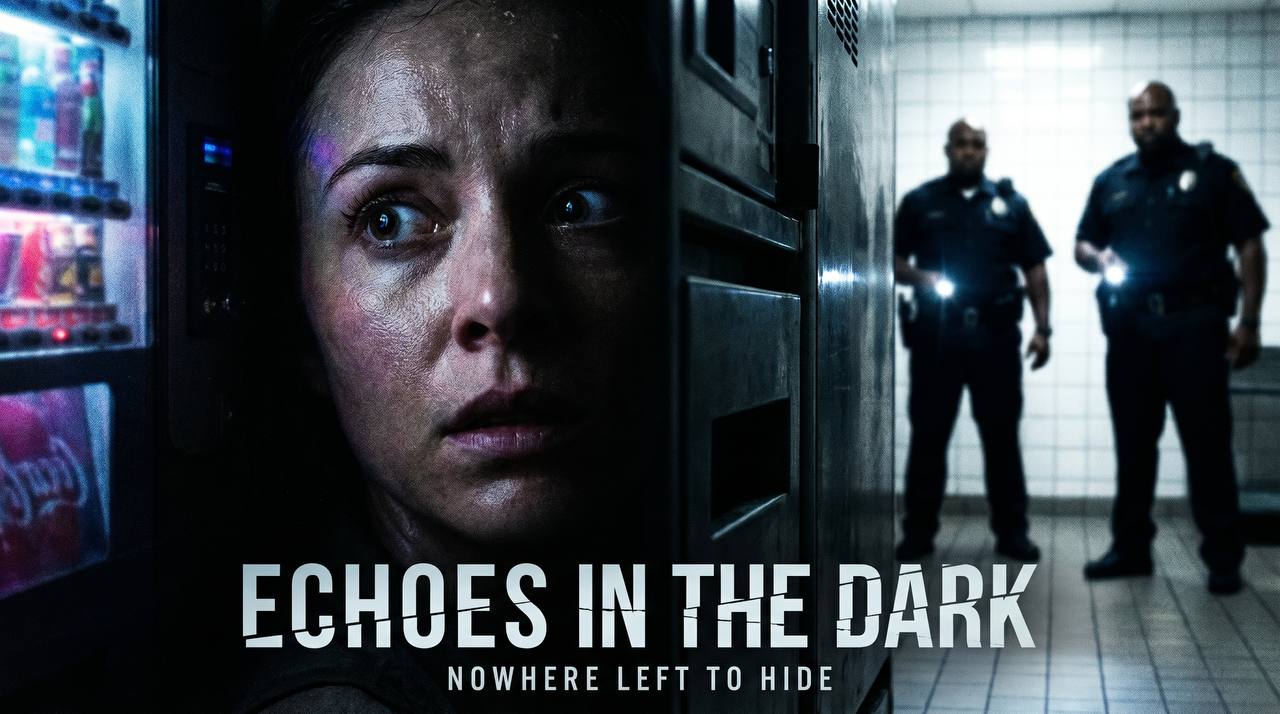
On October 14, 2003, at precisely 11:37 PM, Officer Benjamin Miller of the Meadowbrook Police Department reported an incident that would challenge the very fabric of his understanding of reality. He was in pursuit of Elara Vance, a twenty-eight-year-old woman wanted for questioning in connection with a series of minor burglaries, through the labyrinthine service alleys of the Northwood Industrial Park. The night was cold, a persistent drizzle slicking the asphalt, reducing visibility and muffling sounds. Vance, agile and desperate, had led Miller on a foot chase for nearly ten minutes, weaving between dumpsters and behind derelict warehouses. She made a sudden turn into a particularly narrow passage, flanked by a corrugated metal wall on one side and the grimy brick facade of the old ‘Everett Manufacturing’ plant on the other. At the end of this passage, tucked into a shallow alcove, stood an archaic vending machine, its plastic facade yellowed with age, a few neon letters still flickering faintly. Officer Miller, roughly fifteen feet behind her, witnessed Elara Vance reach the machine, hesitate for a fraction of a second, and then, rather than attempt to climb over or squeeze past it, she simply stepped into it. She did not open a door, nor did she find a hidden cavity. From Miller’s perspective, she merged with the machine, her form dissolving into its dull, reflective surface as if it were not solid at all.
An Impossible Disappearance
Officer Miller skidded to a halt, his flashlight beam fixed on the vending machine. The rain continued to fall. There was no sound, no sign of forced entry, no indication that a human being had just passed through a solid object. He approached cautiously, his hand on his holstered weapon. The machine was a standard ‘Snack-O-Matic 3000,’ a model common in the late 1970s. Its glass front displayed an assortment of stale-looking chips and candy bars. He pressed his hand against the cold metal, then against the glass. It was solid. Unyielding. There was no hidden panel, no secret door, no discernible mechanism that could explain what he had just seen. Miller radioed for backup, his voice betraying a tremor he fought to suppress. Sergeant Davis arrived within minutes, followed by two patrol cars and a K-9 unit. A thorough search of the alley and surrounding area yielded nothing. No footprints beyond Miller’s own, no disturbed foliage, no discarded items from Vance. The police dogs, trained for human scent, circled the vending machine hesitantly, then sat, looking confused. The official report, meticulously drafted by Sergeant Davis, recorded Elara Vance as having
Notes & sources
- · Story is fictional. Names, locations, and events are invented.
This story is a dramatized retelling. Some details, names, and locations have been changed or invented for narrative purposes.