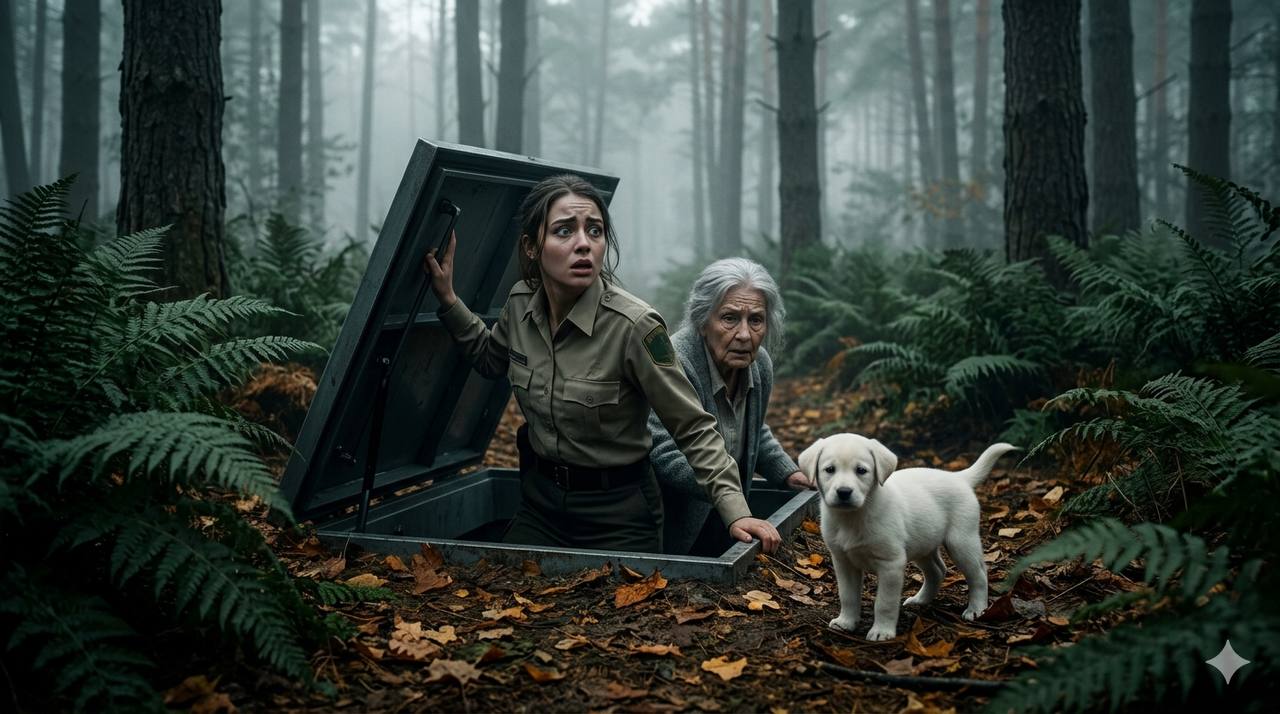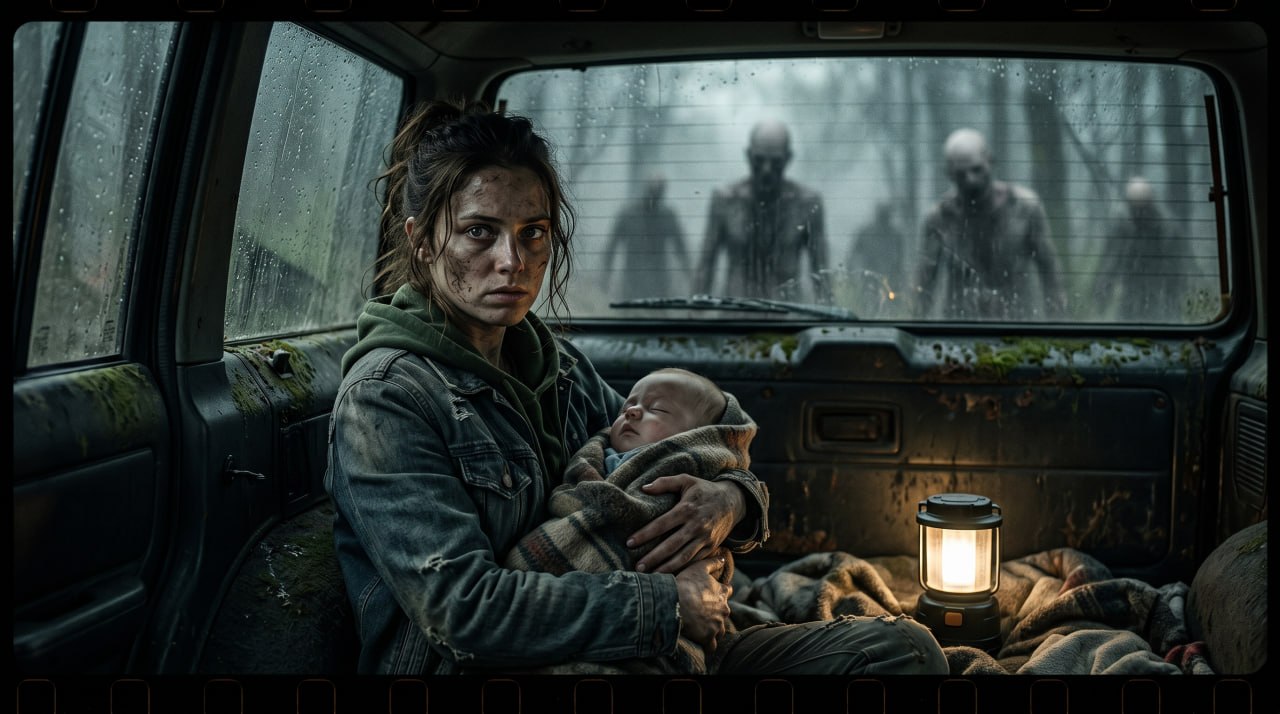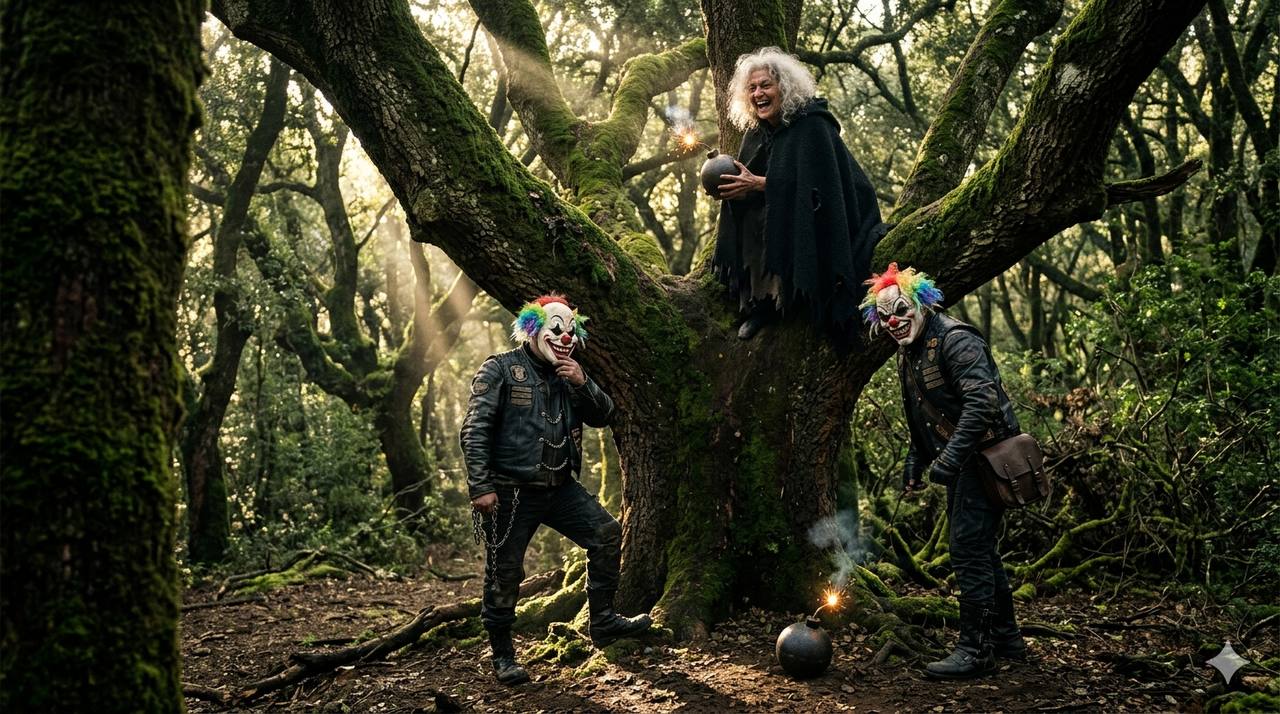
On November 12, 2018, Elias and Silas Thorne, brothers and experienced hunters from the small town of Oakhaven, departed their truck at the edge of Blackwood Forest. Their objective was specific: to track and apprehend what local folklore described as the “Whispering Hag”—a figure they believed to be a disturbed individual responsible for a series of recent disappearances. The brothers, known for their precision and knowledge of the rugged terrain, entered the woods shortly after dawn, equipped for a multi-day expedition. They were never seen again.
The Legend of the Whispering Hag
Blackwood Forest, a sprawling expanse of ancient timber and shadowed ravines, has long been a source of both local pride and disquiet. For generations, tales have circulated among Oakhaven residents of an unseen presence, often described as a gaunt, silent woman, or sometimes merely a fleeting shadow. These stories were typically dismissed as campfire yarns or the overactive imaginations of children. However, beginning in the late spring of 2018, the anecdotes began to coalesce around a more disturbing pattern: people were disappearing.
The first was Martha Cline, an amateur botanist known for her solitary deep-forest excursions, last seen near the old logging trails in May. Two months later, a pair of teenage hikers, Liam and Chloe Vance, vanished from a popular, but remote, overlook. In September, a trapper named Jedediah Price failed to return from his rounds. In each instance, no bodies were found, no struggle evident, and only minimal personal effects—a dropped backpack, a forgotten water bottle—indicated their last known locations. Local law enforcement, led by Sheriff Benjamin Carter, conducted extensive searches, but the forest yielded no answers. The only common thread was the increasingly vivid, if unverified, reports from other hikers and hunters who claimed to have glimpsed a “woman in grey” or heard “faint, sorrowful whispers” emanating from the deeper, older sections of Blackwood.
Elias Thorne, 38, and Silas Thorne, 34, approached the situation with a blend of concern and skepticism. They respected the forest, but they did not believe in ghosts. Their theory, shared with Sheriff Carter during a preliminary meeting, was that a reclusive, perhaps mentally unstable, individual had established a hidden camp or lair within the forest’s labyrinthine interior. This individual, they reasoned, was responsible for the disappearances, possibly luring victims or ambushing them. Their plan was to track this individual, identify their base, and, if necessary, subdue them for the authorities. They were confident in their abilities, having navigated Blackwood since childhood. The forest, to them, was a known quantity.
The Initial Pursuit
The brothers’ initial tracking efforts were meticulous. They began by examining the last known locations of the vanished individuals, searching for any unusual prints or signs of habitation. Elias, with his keen eye for minute detail, soon identified a faint, almost imperceptible trail leading away from Jedediah Price’s abandoned trap line. The prints were unlike any they had encountered before: elongated, narrow, and possessing an odd, almost un-human stride. They moved with a disturbing lightness, leaving little impression on the damp earth, even beneath the weight of decaying leaves and pine needles.
Silas, younger and more impetuous, initially suggested it was an animal, perhaps a large deer or an unusually shaped bear print. Elias disagreed. The pattern was too deliberate, too rhythmic. It suggested bipedal movement, but with an economy of effort that defied human physiology. As they followed, the trail led them deeper into Blackwood, away from any established paths or logging roads, into sections of the forest rarely visited by anyone but the most intrepid hunters. The air grew colder, the canopy thicker, and the silence more profound. The mist, which had been light at dawn, began to thicken, clinging to the ancient trees like a shroud.
The brothers moved with practiced efficiency. Elias took the lead, his rifle held ready, while Silas covered their rear. They communicated with subtle hand signals and whispered commands. The trail itself seemed to possess a strange intelligence. It avoided dense thickets and steep inclines, always choosing the path of least resistance, yet never leading towards any obvious shelter or human-made structure. They found no discarded food wrappers, no signs of a fire, nothing to indicate the presence of a human being. Only those strange, elongated prints continued, leading them ever deeper into the heart of the ancient wood. The initial confidence the brothers felt began to wane, replaced by a growing sense of unease. This was not the trail of a desperate or disturbed human. This was something else entirely.
The Whispering Sentinel
After two days of relentless tracking, marked by a plummeting temperature and intermittent rain, the Thorne brothers reached a clearing unlike any other in Blackwood. At its center stood an enormous, ancient oak, its trunk wider than a small cabin, its branches reaching skyward like gnarled, petrified arms. Estimates would later place its age in excess of a thousand years. Its bark was a tapestry of deep fissures and mossy growths, and at its base, a gaping hollow yawned, dark and inviting. The strange prints they had been following led directly into this opening.
Elias and Silas approached with extreme caution. The air around the tree was heavy, still, and strangely devoid of the usual forest sounds. No birds sang, no insects buzzed. The only audible sound was the gentle drip of moisture from the tree’s upper canopy and, faintly, a low, resonant hum that seemed to emanate from within the hollow itself. It was not a mechanical hum, nor an animalistic one, but something deeper, more vibrational, like the earth itself breathing. The brothers exchanged a look. Their skepticism about the paranormal had been firm, but the raw, primeval presence of the tree, combined with the inexplicable trail, challenged their rational framework.
“This is it,” Silas whispered, his voice uncharacteristically subdued. Elias nodded, his grip tightening on his rifle. The hollow was not a simple cavity. Its entrance was shaped like an elongated archway, smooth on its interior, as if worn by countless passages or perhaps even carved by an unknown force. The scent emanating from within was complex: damp earth, decaying wood, but also something subtly sweet and cloying, like overripe fruit mixed with the metallic tang of old blood. Elias raised his hand, signaling Silas to wait, and slowly, deliberately, he moved towards the opening. He peered into the darkness, his flashlight beam swallowed almost immediately by the profound depth of the hollow. There was no visible floor, only a descending shaft of inky blackness.
Into the Labyrinthine Core
Despite their growing apprehension, the Thorne brothers were committed. They had come too far, and the idea of a disturbed individual lurking within such an ancient, natural fortress compelled them forward. Elias, ever the leader, took the first step, his heavy boots crunching softly on the leaf litter that had accumulated at the threshold. Silas followed, his heart pounding a rhythm against his ribs. The entrance was taller than they were, allowing them to walk upright for several paces before the ceiling began to slope downwards. The hum intensified, a low thrumming that seemed to resonate in their chests.
The air inside was thick and cold, yet strangely humid. The walls of the hollow were not rough, splintered wood, but smooth and strangely yielding, almost cartilaginous in places. Their flashlights cut through the gloom, revealing a space far larger than they had anticipated. It was not a simple tunnel, but a complex, winding series of chambers and passages, some narrow, requiring them to squeeze through, others opening into vast, cavernous spaces. Roots, thick as human thighs, snaked along the walls and floor, pulsating faintly with an inner light that seemed to mirror the hum. This was not merely a hollow tree; it was an organic labyrinth.
As they ventured deeper, the character of the space shifted. The organic smells intensified, becoming more pungent, more alien. They began to notice strange growths on the walls, bioluminescent fungi that pulsed with a soft, green glow, casting eerie shadows. The prints they had followed outside vanished, replaced by smooth, polished surfaces that seemed to absorb all sound. Their voices, when they tried to speak, were swallowed almost immediately, leaving only the persistent, resonant hum. They were disoriented, the passages twisting and turning, offering no clear direction. They realized, too late, that they had entered something far beyond their understanding of the natural world. This was not a lair; it was a living entity, vast and ancient, and they were now caught within its digestive pathways.
The Reversal of the Hunt
It was Silas who first articulated their predicament, his voice a strained whisper. “Elias… we’re not hunting it. It’s hunting us.” A low, guttural click echoed from deeper within the hollow, followed by a slithering sound that seemed to come from everywhere and nowhere. The hum intensified, vibrating through the very ground beneath their feet. The air grew heavy, thick with a palpable sense of predatory awareness. They were no longer the hunters; they were trapped prey, deep within the stomach of an entity that had observed and lured them for days.
Panic, cold and sharp, began to set in. They spun around, trying to retrace their steps, but the passages seemed to shift, to close behind them. The green bioluminescent growths brightened, then dimmed, guiding them deeper, not out. A fleeting shadow, impossibly tall and slender, passed across an opening ahead. It was not the ‘woman in grey’ of the legends, but something far more fundamental, a form woven from shadow and ancient wood, an extension of the tree itself. It moved with a fluid grace that defied any known creature, its presence radiating an intelligence that was both immense and utterly indifferent to human life.
They raised their rifles, but the act felt futile, childish. What could bullets do against something that was part of the very earth, something that breathed and hummed and consumed? A sudden, crushing pressure enveloped them, not physical, but atmospheric, as if the air itself was condensing. Elias felt a profound exhaustion, a sudden, overwhelming desire to simply lie down and rest. Silas, his eyes wide with a terror that transcended fear of death, let out a choked cry as the shadows around them deepened, coalescing into indistinct, moving forms. The whispers, which had been faint, now enveloped them, not sorrowful, but a chorus of ancient, sibilant murmurs, speaking in a language older than humanity itself.
When a search party, prompted by Sheriff Carter after the brothers failed to check in, finally reached the clearing at the ancient oak three days later, they found nothing. No footprints led away from the tree. No discarded gear lay near the hollow entrance. The ancient oak stood silent, impassive, its dark hollow mouth seeming to breathe the cold, still air of Blackwood Forest. The only evidence that Elias and Silas Thorne had ever reached that spot was their abandoned truck, parked neatly on the forest road, its engine cold, its doors unlocked, as if they intended to return at any moment. The legend of the Whispering Hag continues to be told in Oakhaven, but now, sometimes, the stories include the two hunters who thought they knew the woods, and the deep, silent tree that knew them better.
Notes & sources
- · Story is fictional. Names, locations, and events are invented.
This story is a dramatized retelling. Some details, names, and locations have been changed or invented for narrative purposes.