On October 17, 2047, Elara Vance sat in the central observation lounge of what was once the Arkham Botanical Research Facility, now simply known as ‘The Sanctuary.’ Outside the reinforced glass, a thin, persistent fog clung to the skeletal remains of the pine forest that bordered the facility. Within the structure, the silence was absolute, broken only by the hum of the air filtration system and the rhythmic beat of her own heart. Beyond the fog, she knew, the world churned with a relentless, guttural hunger. For twelve weeks, this silence had been her shield, the glass her fragile, transparent wall against the encroaching chaos.
The Last Vestige of Quiet
The Arkham Botanical Research Facility, nestled deep within the Kaelen National Forest, had been designed for extreme isolation. Its primary purpose had been to study genetically modified flora in a controlled, biodome-like environment, necessitating robust climate control and a self-sufficient energy grid. When the collapse came—a swift, virulent reanimation of the recently deceased—Elara, a junior botanist on staff, was among the few who made it inside before the automated blast doors sealed. Her colleagues, Dr. Aris Thorne and technician Liam Carter, had been caught outside during a supply run, their final, garbled radio transmissions dissolving into static before the silence truly descended. For weeks, Elara moved through the facility’s sterile corridors, a solitary echo in a tomb of scientific ambition. She rationed the freeze-dried meals, tended to the still-living plants in the bio-domes, and meticulously logged the dwindling power reserves. Her initial hope had been that the isolation was temporary, a mere delay before rescue. The passing weeks, marked by the gradual cessation of all distant electronic signals, had disabused her of this notion. The silence was not a pause; it was the new normal.
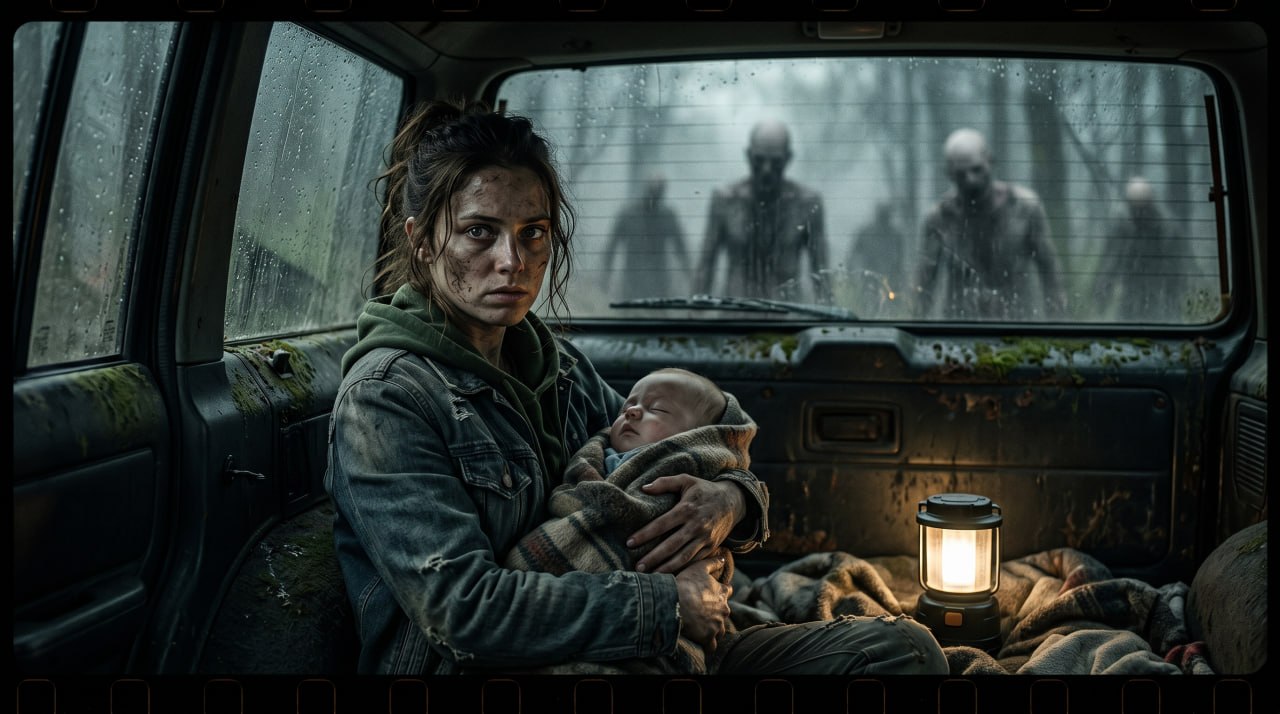
The large, panoramic observation lounge, where she now spent most of her waking hours, offered an uninterrupted view of the facility’s perimeter. The glass, designed to withstand hurricane-force winds and minor seismic activity, felt impregnable. Its thickness muted the outside world to an almost perfect hush. Occasionally, a shadow would pass through the fog, a shambling silhouette of what had once been a person. She had named them ‘the Wanderers’ in her internal monologue, a futile attempt to strip them of their horror. They moved without purpose, drawn by ambient sounds or simply by the path of least resistance. They were a slow, persistent tide, but one that seemed to ebb and flow with no particular direction. The facility’s automated defenses—motion-activated floodlights, a reinforced fence line—had initially deterred them, but the power grid was not infinite.
The Gathering Tide
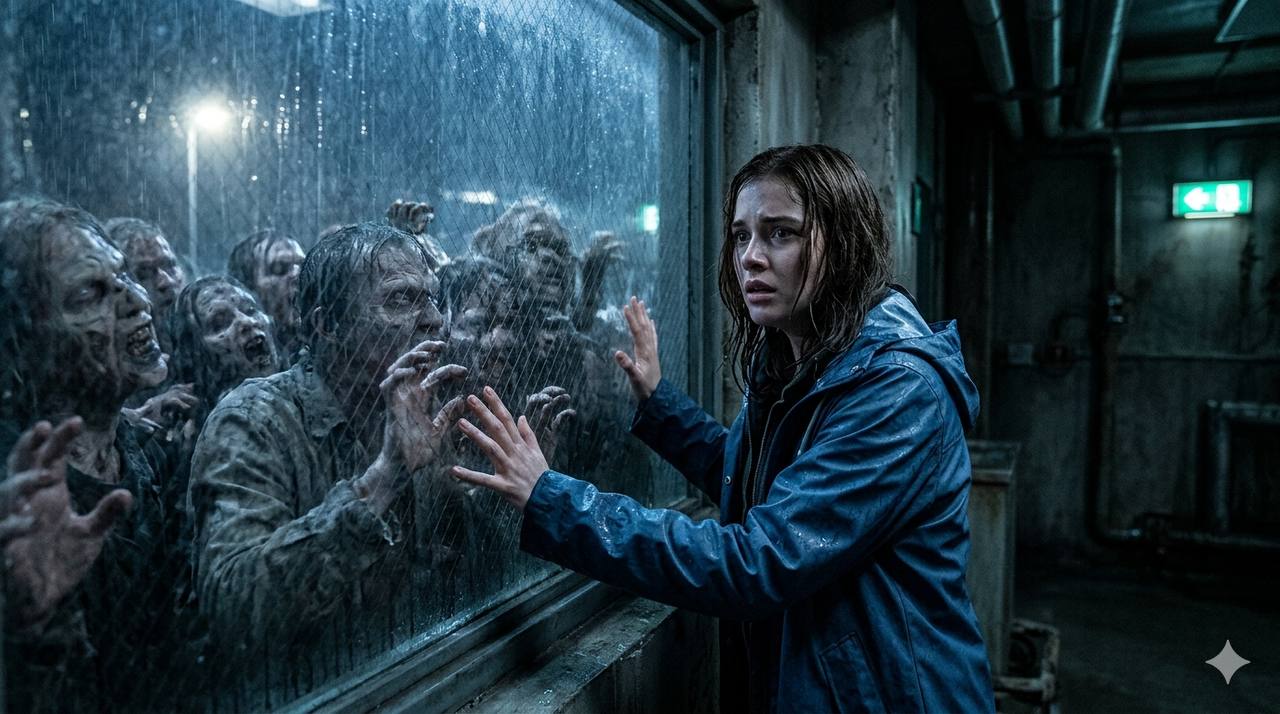
By the end of the eleventh week, a subtle shift began to manifest. The Wanderers, previously sporadic and aimless, began to appear with increasing frequency. Their movements, while still uncoordinated, seemed to coalesce around the perimeter of the facility. Elara first noticed it when her night vision cameras, which drew minimal power, showed a cluster of six figures lingering near the western fence line for several hours, a marked departure from their usual transient patterns. The next day, there were ten. By the end of the twelfth week, a semi-permanent congregation had established itself. They did not seem to be actively attempting to breach the fence, merely existing there, a silent, festering wall of decaying flesh. Their numbers grew daily, a slow, horrifying accretion. The fog, a persistent companion, often obscured the full extent of their gathering, but Elara’s binoculars, trained for hours on end, revealed the truth. Dozens, then scores, of figures stood shoulder to shoulder, their forms indistinct, their vacant gazes pointed towards the glass. The silence within the lounge, once comforting, now felt oppressive, amplifying the horror of the visual spectacle outside.
Elara began to spend more time checking the structural integrity of the facility. She reviewed old blueprints, searching for any overlooked weaknesses in the reinforced concrete and steel, particularly around the foundation and the glass-to-frame seals. The facility had been built like a bunker, a fortress against both natural disaster and industrial espionage. Yet, its designers had never accounted for an external pressure that was alive, or rather, un-alive, and constantly present. The sheer weight of their numbers, she reasoned, might not breach the walls, but their constant, unthinking presence could stress the perimeter, perhaps finding a weak point over time. She activated the external floodlights more frequently, hoping the sudden burst of illumination would disperse them, but they merely recoiled momentarily before slowly reforming their ranks. They were not deterred; they were merely inconvenienced.
The Transparency of Danger
The most insidious aspect of Elara’s predicament was the glass itself. It provided perfect visibility, a panoramic view of her impending doom. She could see every tattered garment, every vacant eye socket, every slow, dragging footstep. She could observe the subtle twitch of their decaying muscles, the occasional clatter of bone against bone, the way their pale hands brushed against the fence. Yet, she could hear none of it. The thick, laminated panes, designed for acoustic isolation, rendered the approaching threat silent. This detachment created a surreal, almost cinematic horror. It was like watching a terrifying film without sound, where the absence of screams or groans made the visual impact even more unsettling. She imagined the cacophony they must be making—the scraping, the groaning, the constant, low moan of a thousand hungry throats—and the silence amplified her imagination, making it worse than any actual sound could be.
Her sleep became more fractured. Even when she retreated to her small cot in the adjacent staff quarters, the image of the silent, waiting horde remained seared behind her eyelids. She began to mark the days by the density of the figures outside. A new perimeter camera, a low-resolution infrared model, provided a wider view of the north face, confirming her fears: the congregation was not limited to the west. They were encircling the entire facility, a slow, deliberate siege. The energy expenditure for the cameras and lights was becoming a concern. Her power reserves were finite, and without external input, the solar arrays and wind turbines were slowly losing their efficiency, caked with dust and debris from the general collapse. She had enough power for another two years if she was careful, but ‘careful’ was becoming a relative term.
Echoes in the Silence
Elara often found herself staring at the small, framed photo she had rescued from her locker—a faded image of her family at a beachside picnic, taken years before the world fractured. Her parents, her younger sister, all smiling, vibrant, oblivious to the encroaching darkness. She wondered where they were now, if they had found a sanctuary of their own, or if they too had become part of the silent, endless tide. The memories brought a sharp, physical ache, a counterpoint to the numbing silence of her present. She recalled the initial reports, dismissed as fringe conspiracy theories: a fast-acting neurological agent, a fungal infection, an ancient curse. No one had agreed, no one had known. Now, the why no longer mattered. Only the how long remained a question.
She noticed a change in the air pressure. A low, persistent vibration, almost imperceptible, began to resonate through the facility’s floor. It was not a sound she could hear with her ears, but one she felt in her bones, a deep thrumming that intensified with each passing day. It was the cumulative pressure of hundreds, perhaps thousands, of bodies pressing against the outer fence, their weight slowly deforming the metal, pushing it inward. The fence, designed to keep out wildlife and curious hikers, was never meant to withstand a constant, organic siege. The vibration was a physical manifestation of the hunger outside, a silent declaration that the glass, for all its strength, was merely delaying the inevitable.
The Shifting Barrier
The morning of the eighty-seventh day within the sanctuary brought with it a distinct, sharp crack. It was not a sound that penetrated the thick glass of the observation lounge, but a sensation Elara felt through the soles of her worn boots. She traced the source to the north-western corner of the main lounge, where a hairline fracture, no longer than an inch, marred the pristine surface of the outermost pane. It was not a structural failure, not yet, but a stark reminder of the relentless pressure. The crack branched, spider-webbing subtly across the glass over the next few hours, a slow, deliberate spread. Through her binoculars, Elara could see the faces pressed against the outer fence, their pale, unseeing eyes fixed on the facility. Some leaned against the metal, their decaying weight pushing it further inward. A few seemed to claw at the mesh, their movements slow and weak, but persistent.
She activated the external sonic emitters, a last-ditch deterrent designed to scare away large animals. A high-frequency wail, barely audible to human ears, pierced the morning air. Outside, the Wanderers paused, their heads tilting at unnatural angles. For a fleeting moment, a few of them stumbled backward, a ripple passing through the dense throng. But the effect was temporary. Within minutes, they resumed their positions, their vacant stares unwavering. The sonic deterrent, a tool against instinctual fear, was useless against something that had no fear, no instinct beyond a singular, unyielding drive. The crack in the glass grew longer, a silent testament to the efficacy of sheer, unthinking numbers. Elara watched it spread, her fingers brushing against the cool, smooth surface, feeling the subtle tremor of the growing multitude beyond. The silence held within the lounge, but its fragile peace was now visibly threatened.
The sun began its slow descent, painting the fog a grim crimson. The fracture in the glass had extended, now a prominent, jagged line running almost a foot across the pane. She knew the inner layers would hold for a time, but the barrier was compromised. The facility, once a beacon of scientific isolation, had become a glass cage, offering a panoramic view of its own slow, inevitable compromise. The hunger outside was just beginning its earnest work, and the silence within would not last forever.
Notes & sources
- · Story is fictional. Names, locations, and events are invented.
This story is a dramatized retelling. Some details, names, and locations have been changed or invented for narrative purposes.