On October 17, 2018, Elara Vance, a landscape architect from Oakhaven, made a last-minute decision to take a scenic detour through the Blackwood Range. Her GPS, usually reliable, struggled with the remote terrain, eventually guiding her onto an unpaved service road marked only by a faded, weathered sign indicating “Hydro Plant Access - Decommissioned.” The afternoon light was already fading, and a persistent drizzle had begun to obscure the windshield of her older model sedan.
Elara had intended to reach the town of Havenwood before nightfall, a small settlement known for its artisan community and a bed-and-breakfast she had booked. The service road, however, quickly deteriorated, becoming a winding track of loose gravel and exposed rock. Branches scraped against the car’s paint, and the intermittent rain intensified, transforming into a heavy downpour. Visibility dropped sharply, and the familiar outlines of the surrounding pine forests blurred into an indistinguishable wall of green and grey. It was then, through a momentary break in the storm, that she saw the structure.
The Iron Gate and the Descent
The building was an imposing, brutalist edifice of reinforced concrete and dark, rusted steel, perched precariously on the side of a steep incline. It was unlike any hydro plant Elara had ever seen, resembling more a Cold War-era bunker or a forgotten observatory. A heavy, wrought-iron gate, its paint long since peeled, stood slightly ajar, inviting or perhaps simply failing to deter. With her phone signal long gone and the storm showing no signs of abating, the structure offered the only immediate prospect of shelter. She eased her car through the gate, the tires crunching over the damp gravel, and parked it near the building’s main entrance.
The entrance itself was a massive, unadorned steel door, at least three inches thick, set into a concrete wall. It had no handle on the exterior, only a recessed panel with a heavy, rusted lever. Elara, shivering despite her rain jacket, pushed the lever downwards. A deep, mechanical groan echoed from within, followed by a hiss of old hydraulics. The door swung inward with surprising ease, revealing a dark, cavernous interior. The air inside was cool and damp, carrying the faint, metallic scent of ozone and stale water. She stepped across the threshold, her boots clattering on the concrete floor, and without conscious thought, let the heavy door swing shut behind her. The clang it made as it sealed was deafening, a sound that seemed to reverberate through the very foundations of the mountain.
The Observation Deck
Inside, the immediate area was a vast, circular antechamber, lit by faint, emergency lights embedded in the ceiling. These lights cast long, distorted shadows that danced as Elara moved, creating an unsettling atmosphere. The space was devoid of any furniture or equipment, suggesting a transitional area rather than an active workspace. A single, wide stairway, also concrete, spiraled downwards into the gloom. Hesitantly, Elara began her descent, her hand trailing along the cold, smooth banister.
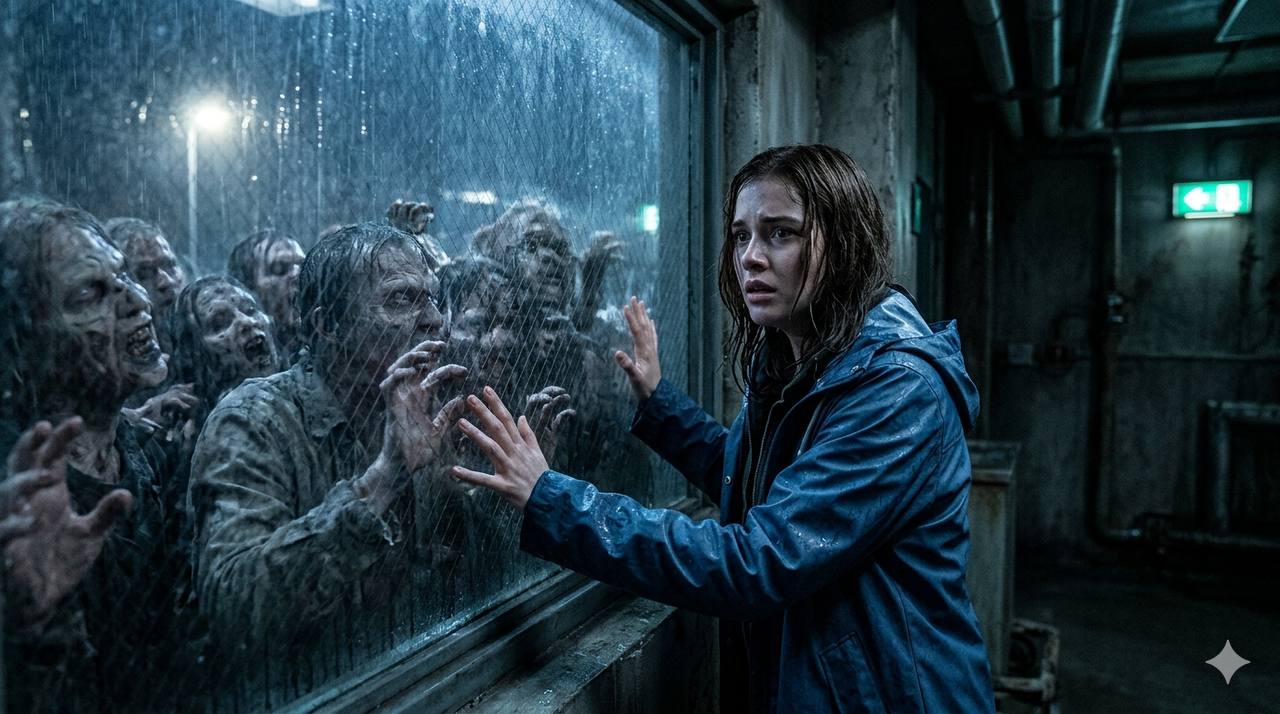
The staircase ended in a smaller, more contained room: an observation deck. This room was dominated by a colossal pane of reinforced glass, stretching from floor to ceiling, looking out onto an immense, subterranean cavern. The scale was breathtaking. Directly opposite, a colossal waterfall plunged hundreds of feet into a churning, unseen abyss, its roar a constant, resonant vibration that seemed to penetrate bone. The water glowed with an eerie, phosphorescent quality, likely from some mineral deposit or perhaps an algal bloom. Beyond the waterfall, the cavern stretched into impenetrable darkness, its true size unknowable. Elara felt a strange mix of awe and unease. This was not merely a disused hydro plant; it was an architectural marvel, hidden deep within the earth.
She moved closer to the glass, pressing her palm against its cool surface. The transparency was absolute, offering an unobstructed view of the churning water. It was then she noticed the control panel, built into the wall beside the glass. It was old, clearly non-functional, with dozens of unlabelled buttons and dials. A small, digital clock on the panel flickered erratically, displaying “00:00.” She tried the main entrance door again, the one that had clanged shut above. It was locked. Utterly, irrevocably locked. Panic, cold and sharp, began to set in.
The Unseen Audience
As hours passed, the emergency lights began to dim further, plunging the observation deck into near-darkness, save for the faint glow from the waterfall. Elara, huddled on the cold concrete floor, tried to conserve her phone battery, using its flashlight sparingly. The roar of the waterfall was a constant, oppressive presence, yet through its unceasing thrum, she began to discern other sounds. Faint at first, then more distinct. A tapping. A scratching. It seemed to come from beyond the glass, from the cavern itself.
She shone her phone’s beam across the vast pane. Nothing. Just the rippling reflections of the waterfall. But the sounds persisted. A rhythmic, almost deliberate scraping, as if something with long, thin claws was dragging itself across the outer surface of the glass. The noise was chilling, not merely because of its presence, but because it implied proximity. Something was out there, in the pitch-black vastness of the cavern, and it was close enough to touch the observation window. The thought made her skin crawl.
Elara pressed herself against the wall, trying to make sense of the situation. Was it an animal? A bat, perhaps, or some rodent? The scratching, however, lacked the erratic nature of an animal. It was slow, deliberate, almost exploratory. She held her breath, listening. The sounds would pause, then resume, sometimes in a different spot along the glass. She imagined elongated fingers, or perhaps multiple, smaller appendages, moving with an unsettling intelligence. The feeling of being watched intensified, a primal dread creeping into her consciousness.
Desperate Measures and Fading Hope
By the second day, Elara’s initial panic had given way to a grim determination. She scoured the observation deck, searching for anything that could help her escape. The control panel yielded nothing. The glass, she quickly realized, was impossibly thick, designed to withstand immense pressure. She found a small, rusted fire extinguisher, its gauge in the red, and a heavy, discarded wrench near a defunct electrical conduit. She tried to pry at the door frame, at the edges of the glass, but the structure was built to last, a testament to Cold War engineering and paranoia. Each attempt was futile, echoing loudly in the enclosed space, only to be swallowed by the waterfall’s roar.
The scratching outside became bolder. Sometimes, she thought she saw movement in the cavern’s periphery, just beyond the glow of the waterfall. Shapes, indistinct and fleeting, that seemed to glide through the darkness. They were never fully visible, always just at the edge of her vision, like motes of dust in a darkened room, but larger, more substantial. The scratching would follow these movements, a cacophony of scraping and tapping that seemed to emanate from multiple points on the glass simultaneously. It was as if whatever was out there was mapping the surface, or perhaps, simply trying to get her attention.
She began to ration the few granola bars and the half-empty bottle of water from her car. Her phone battery died completely, plunging her into isolation. The air grew colder, the dampness seeping into her clothes and bones. Sleep became a fitful, terrifying affair, punctuated by the relentless sounds from outside. She would wake with a start, convinced she saw a faint, distorted reflection on the glass, a shape that did not belong, a presence that was too tall, too thin, too angular to be human.
The Unseen Observers
Days blurred into an indistinguishable cycle of dwindling supplies, constant fear, and the unyielding roar of the waterfall. Elara’s initial attempts at rationalization – bats, cave-dwelling animals, geological shifts – began to crumble. The scratching was too purposeful, too persistent. It was a communication, or perhaps, a warning. Or worse, a simple act of observation. She was a specimen, trapped in a glass enclosure, observed by unseen entities that moved with unnerving grace in the darkness beyond. The thought was paralyzing.
The shapes in the cavern became slightly clearer, or perhaps her mind, deprived of sleep and sanity, began to conjure them with greater detail. Tall, attenuated figures, almost skeletal, with limbs that seemed too long, too jointed. They never approached the waterfall’s light, preferring the deepest shadows, yet their presence was undeniable. Their movements were fluid, silent, except for the scratching, which now sounded less like an attempt to break in, and more like a patient, methodical study.
She stopped trying to escape. Her energy waned, her voice hoarse from crying out into the void. She sat by the glass, watching the perpetual cascade of water, her only light. The figures outside seemed to gather, their faint outlines pressed against the distant dark. The scratching intensified, a chorus of thin, sharp sounds against the impenetrable barrier. It was a language she could not understand, but its intent felt unmistakably clear. She was not alone. And she was not leaving.
The last faint images captured by a satellite passing over the Blackwood Range on October 25 showed Elara Vance’s sedan still parked by the disused hydro plant. Local authorities, alerted by her worried family, found the heavy iron gate slightly ajar, the track leading to the structure barely visible beneath a fresh layer of fallen leaves. The steel door to the main entrance was discovered sealed, unyielding to all attempts at entry. No trace of Elara Vance was ever found, nor any explanation for the peculiar sounds reported by search teams—a faint, rhythmic scraping that seemed to eman emanate from deep within the earth, audible even over the distant murmur of the Blackwood River.
Notes & sources
- · Story is fictional. Names, locations, and events are invented.
This story is a dramatized retelling. Some details, names, and locations have been changed or invented for narrative purposes.